UK Anti-Dumping Duty on Chinese Glass Bottles and Jars: Importer Guide
Specified Chinese glass bottles, jars and packaging containers now face provisional UK anti-dumping rates of 24.65%–52.97%. Learn what importers must check.
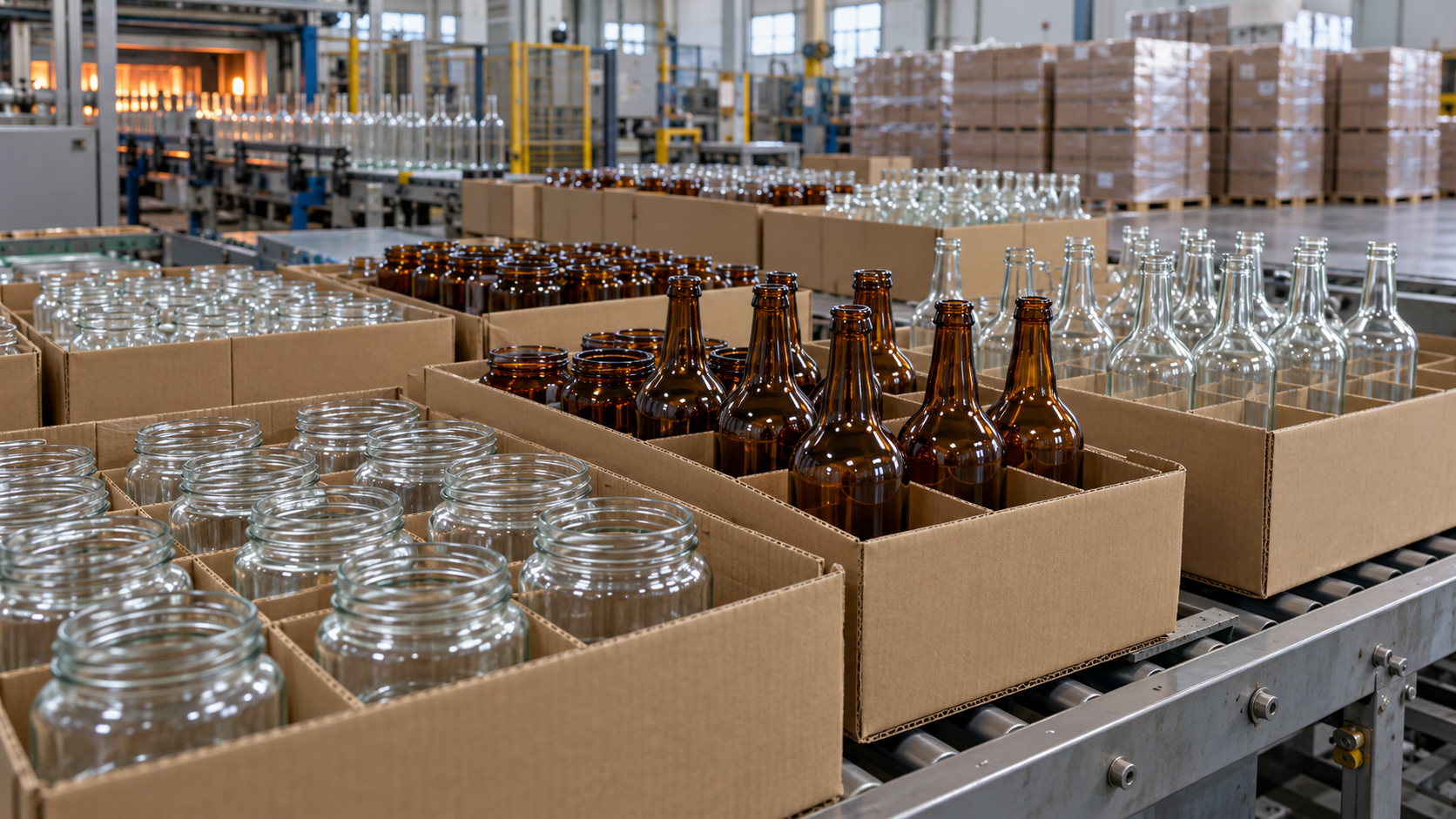
Specified glass bottles, jars and other packaging containers originating from China have been subject to provisional UK anti-dumping measures since 9 September 2026.
The provisional rates range from 24.65% to 52.97%, depending on the Chinese producer and the documentation presented to HMRC. Importers of affected goods must provide a bank guarantee, bond or cash deposit covering the estimated amount.
The measure does not cover every glass product. It applies to specified containers used to convey or package goods, subject to the detailed product description, exclusions, commodity codes and country of origin.
UK buyers should establish the actual manufacturer, commodity code and required invoice declaration before production or shipment. Waiting until the goods reach a UK port could result in an unexpected guarantee requirement, clearance delay or significantly higher landed cost.
What Has Changed?
The UK Government accepted the Trade Remedies Authority's provisional recommendation following an investigation into specified glass containers originating from China.
The measure took effect on 9 September 2026 and can remain provisional for up to six months, or until a definitive measure is introduced.
The Government notice requires importers to secure the estimated anti-dumping amount using:
- A bank guarantee
- A bond
- A cash deposit
The secured amount becomes payable if a definitive anti-dumping measure is imposed. If no definitive measure is introduced, or the final rate is lower, HMRC's notice explains the applicable return or reimbursement process.
Importers should not treat the provisional nature of the measure as a reason to ignore it. The necessary guarantee can affect cash flow and prevent goods being cleared as originally planned.
Which Glass Containers Are Covered?
The official goods description includes specified:
- Bottles
- Jars
- Preserving jars
- Carboys
- Flasks
- Pots
- Phials
- Other glass containers used for conveying or packing goods
The measure can apply whether or not a container is supplied with a closure.
This means it may be relevant to packaging used for products such as:
- Food and preserves
- Beverages
- Sauces and condiments
- Cosmetics
- Fragrances
- Pharmaceuticals
- Household products
- Other retail or industrial goods
The product's intended packaging function matters. Buyers should not assume that every object described commercially as a glass bottle or jar automatically falls within the measure.
Which Products Are Excluded?
The official notice excludes:
- Ampoules
- Containers manufactured from tubular glass
- Glass containers with a nominal capacity of 2.5 litres or more
- Standalone glass stoppers, lids or other closures
- Goods that do not meet the detailed covered-goods description
Drinking glasses, decorative vases and ordinary glass tableware are not automatically included merely because they are made from glass.
However, classification must be based on the actual product, specifications and intended use — not simply the name used on a supplier's quotation.
Where the goods fall under a listed commodity code but do not match the covered description, the relevant exclusion code may need to be entered on the import declaration.
Which Commodity Codes Are Listed?
The Government notice lists the following UK Global Tariff commodity codes:
- 7010 9010 00
- 7010 9041 00
- 7010 9043 00
- 7010 9045 00
- 7010 9047 00
- 7010 9051 00
- 7010 9053 00
- 7010 9055 00
- 7010 9057 00
- 7010 9061 00
- 7010 9067 00
- 7010 9071 00
- 7010 9079 00
- 7010 9091 00
- 7010 9099 00
A commodity code alone does not settle whether the measure applies. The product must also match the official goods description and origin requirements.
Importers should obtain sufficient technical information to support classification, including the container's:
- Material and manufacturing method
- Nominal capacity
- Dimensions and weight
- Intended use
- Product photographs or drawings
- Closure arrangement
- Country of origin
- Actual manufacturer
What Are the Provisional Rates?
The applicable rates depend on the Chinese producer. The Government notice sets out producer-specific rates for named cooperating producers and producer groups, alongside a residual rate for all other exporters.
The rates referenced in the official notice range from 24.65% to 52.97%. The residual rate — which applies where the manufacturer cannot be identified or the required documentation is not presented — is at the higher end of this range.
Importers should consult the official Government notice for the full schedule of producer-specific rates and corresponding additional customs codes. The correct additional code must be entered on the import declaration.
Why the Actual Manufacturer Matters
A Chinese trading company may quote, invoice and export the goods while production takes place at a separate glass factory.
The UK importer therefore needs to establish:
- The legal name of the manufacturer
- The address of the production facility
- Whether the seller and manufacturer are different businesses
- Which producer group or category applies
- The correct additional customs code
- Whether the invoice contains the required declaration
- Whether any production is subcontracted
The manufacturer should be confirmed before the order is placed. Discovering after production that the goods came from an unidentified or different factory could materially change the import cost.
Read the Sauce Asia guide to distinguishing a Chinese manufacturer from a trading company.
What Invoice Declaration Is Required?
To qualify for a producer-specific rate, the importer must present a valid commercial invoice containing the declaration prescribed by the Government notice.
The declaration must identify information including:
- The volume of goods
- The producer's company name and address
- The relevant additional customs code
- The country
- The identifiable name and function of the signing official
- The date and signature
If the required invoice or declaration is missing, the residual rate may apply.
The invoice, packing list and customs declaration should all describe the goods consistently. Vague descriptions such as "glass products" or "packaging" may be insufficient.
How Could the Measure Affect Landed Cost?
The guarantee is calculated by applying the relevant provisional percentage to the customs value of the affected goods.
For example, if the customs value were £10,000:
- At 24.65%, the estimated guarantee would be £2,465
- At 26.87%, it would be £2,687
- At 52.97%, it would be £5,297
These examples are illustrative and exclude other costs.
The complete landed cost may also include:
- Normal customs duty
- Import VAT
- Factory collection
- Chinese export and documentation charges
- International freight
- Cargo insurance
- UK port and destination charges
- Customs-clearance fees
- Storage or demurrage
- Final delivery into the UK warehouse
Importers should model the applicable producer-specific and residual-rate scenarios before approving an order.
Read the Sauce Asia guide to calculating the cost of importing from China to the UK.
What Happens to Orders Already in Production?
The measure applies according to the relevant import date and conditions, not simply the date on which the purchase order was placed.
An order agreed before 9 September may still be affected if the goods are imported after the measure took effect.
For goods already in production or transit, importers should urgently confirm:
- Whether the product matches the covered description
- The UK commodity code
- The actual Chinese manufacturer
- The applicable additional code and provisional rate
- Whether the commercial invoice contains the required declaration
- How the guarantee will be provided
- Whether the revised landed cost remains commercially viable
- Whether the customs representative has received the necessary information
Do not instruct the supplier to use a different commodity code merely to avoid the measure. The declaration must accurately describe the goods.
Seven Checks Before Ordering Glass Packaging From China
1. Confirm the exact product specification
Record the capacity, dimensions, material, manufacturing method, intended use and closure arrangement.
2. Identify the real factory
Verify who manufactures the containers rather than relying solely on the exporter's identity.
3. Check the UK commodity code
Use the UK Trade Tariff and obtain specialist classification assistance where genuine uncertainty exists.
4. Check the official goods description
Review both the inclusions and exclusions in the Government notice.
5. Establish the applicable producer rate
Confirm whether the factory belongs to a named group or listed cooperating-producer category.
6. Arrange the required invoice declaration
Provide the official wording to the supplier before the invoice is issued.
7. Recalculate the complete landed cost
Include the potential guarantee, freight, ordinary duty, VAT, clearance and warehouse delivery before paying a deposit.
How Sauce Asia Can Help
Sauce Asia can help UK businesses connect the Chinese manufacturing and logistics stages of an import project.
Depending on the requirement, this can include:
- Identifying and assessing Chinese manufacturers
- Visiting the actual production facility
- Confirming whether the supplier is a factory or trading company
- Obtaining product specifications and factory details
- Managing samples and production
- Conducting quality inspections
- Checking packing information, quantities and weights
- Coordinating collection and freight
- Supporting customs-clearance arrangements
- Arranging delivery into the customer's UK warehouse
Sauce Asia does not provide binding tariff-classification, tax or legal advice. Importers should obtain appropriate specialist advice where the treatment of a product is uncertain.
Our role is to help ensure that the factory, product, documentation, quality-control and shipment information is available to the importer and its customs representative before the goods arrive.
Learn more about China sourcing and manufacturing, factory audits in China and China-to-UK freight, customs clearance and warehouse delivery.
Frequently Asked Questions
Is there now anti-dumping duty on glass bottles imported from China?
Specified glass packaging containers originating from China have been subject to provisional UK anti-dumping measures since 9 September 2026. The detailed product description, commodity code, origin and manufacturer determine whether the measure applies.
How much is the provisional rate?
The rates range from 24.65% to 52.97%. The correct rate depends on the manufacturer and required documentation.
Are all Chinese glass products affected?
No. The measure concerns specified containers used to convey or package goods. It does not automatically cover drinking glasses, decorative glassware or every product classified within Chapter 70.
Are glass containers holding 2.5 litres or more included?
No. The official goods description excludes containers with a nominal capacity of 2.5 litres or more.
Why do I need to identify the factory?
Producer-specific rates apply. If the actual manufacturer and required additional code cannot be established, the residual rate may apply.
Is the exporter's ordinary invoice sufficient?
Not necessarily. To obtain a producer-specific rate, the commercial invoice must include the declaration prescribed by the official notice.
Is the provisional amount paid immediately?
Importers must provide a bank guarantee, bond or cash deposit. The amount becomes payable if a definitive measure is imposed, subject to the final decision and HMRC's applicable processes.
Can Sauce Asia arrange customs clearance and warehouse delivery?
Sauce Asia can help coordinate factory collection, international freight, customs-clearance arrangements and onward delivery into the customer's UK warehouse or agreed commercial destination.
Discuss Your China Packaging Requirement
If you are ordering glass packaging or other manufactured products from China, confirm the actual factory, classification, documentation and complete landed cost before approving production.
Sauce Asia can help coordinate the Chinese manufacturer, production, quality inspection, freight, customs-clearance arrangements and final UK delivery.
Discuss Your China Packaging Requirement