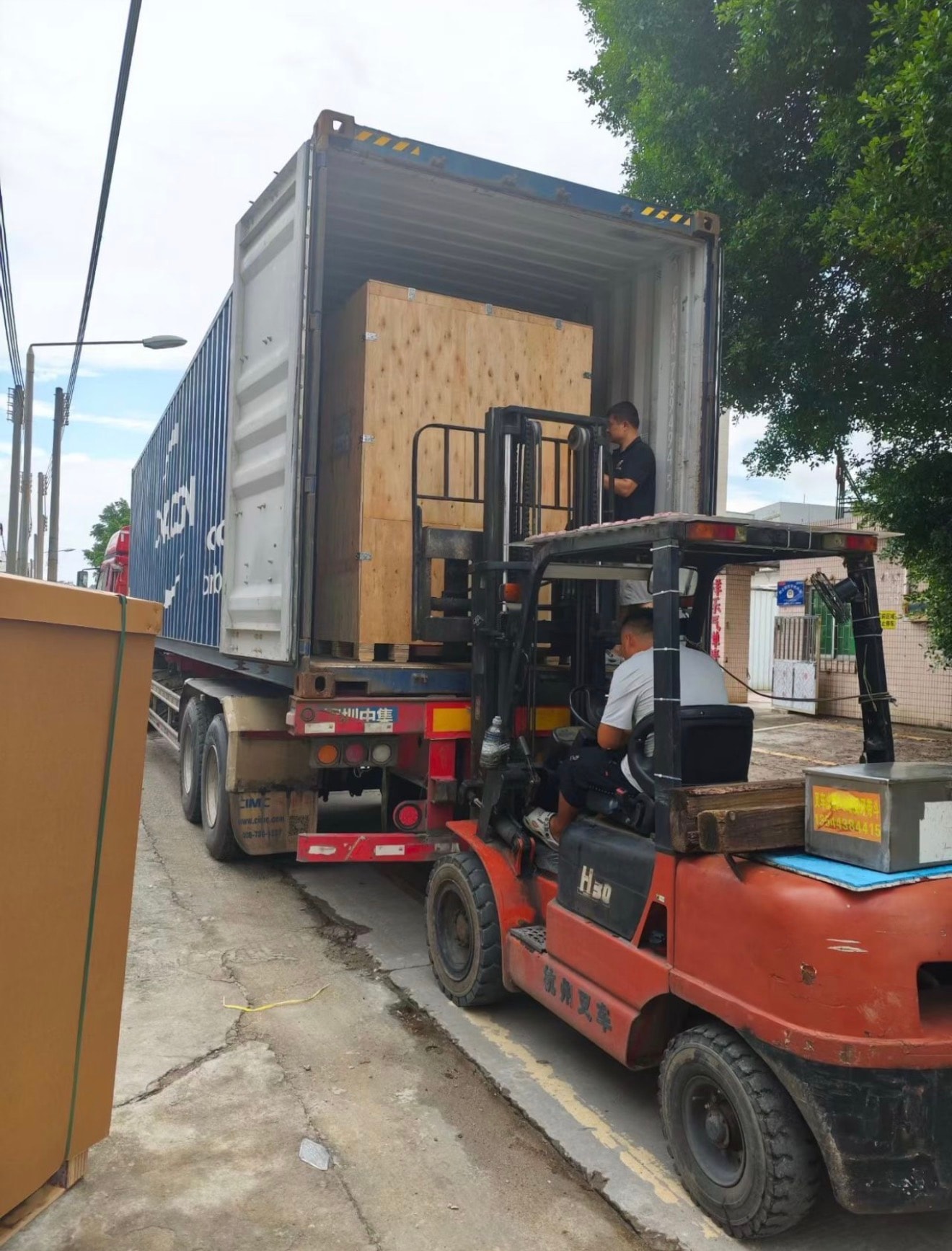
How Much Does It Cost to Import From China to the UK?
Understanding the full landed cost of importing from China is essential before placing an order. This guide explains the components of landed cost — from factory price through freight, duty and VAT to UK delivery.

One of the most important calculations in China sourcing is landed cost — the total cost of getting goods from the factory in China to your premises in the UK. Buyers who focus only on the factory price and overlook the other costs involved can find that a product that looked attractively priced in China is considerably less attractive once all the costs are accounted for.
This guide explains the main components of landed cost for goods imported from China to the UK.
Important note: Import duty rates, VAT rates, commodity codes, and customs requirements depend on the specific goods and circumstances and can change. The information below is a general guide. For accurate, current information on duty rates and import requirements for your specific products, consult the UK Government's Trade Tariff tool at gov.uk/trade-tariff or speak to a licensed customs broker. Sauce Asia does not provide regulated tax or legal advice.
1. Factory Price
The starting point is the price quoted by the factory. Factory prices are typically quoted on one of several trade terms (Incoterms):
- EXW (Ex Works) — the factory price only; all transport, export, and import costs are the buyer's responsibility
- FOB (Free on Board) — the factory price plus China-side transport and export costs to the port of loading; ocean freight and import costs are the buyer's responsibility
- CIF (Cost, Insurance, Freight) — the factory price plus China-side transport, export costs, ocean freight, and insurance to the UK port; import costs are the buyer's responsibility
Understanding which Incoterm applies to a quotation is essential for comparing prices accurately.
2. China-Side Transport
If the price is quoted EXW, you need to add the cost of transporting goods from the factory to the port of loading (typically Shanghai, Ningbo, Guangzhou, or Shenzhen for most UK-bound shipments).
3. Export and Handling Costs
Export documentation, customs clearance in China, and port handling charges add to the cost. These are typically included in FOB prices but need to be added to EXW prices.
4. Quality Inspection
If you are using a third-party inspection service, inspection costs need to be included in your landed cost calculation. Inspection costs vary depending on the scope of inspection, the location of the factory, and the inspection provider.
5. Ocean Freight
Ocean freight is typically the largest single cost after the factory price for most shipments.
Full Container Load (FCL) — you pay for the entire container, regardless of how much of it you fill. FCL is generally more economical for larger shipments. Standard containers are 20ft (approximately 25-28 cubic metres usable) and 40ft (approximately 55-60 cubic metres usable).
Less than Container Load (LCL) — your goods share a container with other shippers' goods. LCL is generally more economical for smaller shipments but involves additional handling and slightly longer transit times.
Ocean freight rates vary significantly depending on the route, the time of year, market conditions, and the shipping line. Rates can change substantially from month to month. Get current quotes from a freight forwarder rather than relying on historical rates.
Transit time from China to the UK by sea is typically 25-35 days depending on the route and service.
6. Air Freight
Air freight is significantly faster than sea freight (typically 5-7 days) but considerably more expensive per kilogram. Air freight is generally economical only for high-value, low-weight goods, or for urgent shipments where the cost of delay outweighs the additional freight cost.
7. Weight vs Volume
Freight costs are calculated on the basis of either actual weight or volumetric weight (also called dimensional weight), whichever is greater. Volumetric weight is calculated from the dimensions of the shipment.
For lightweight but bulky goods, volumetric weight will typically be the basis for freight charges. For dense goods, actual weight will typically apply.
8. Insurance
Marine cargo insurance covers loss or damage during transit. Insurance is not compulsory but is generally advisable for valuable shipments. The cost is typically a small percentage of the insured value.
9. UK Port and Handling Charges
On arrival in the UK, port handling charges, terminal handling charges, and container demurrage (if the container is not returned promptly) add to the cost.
10. Customs Clearance
Customs clearance in the UK involves submitting an import declaration and paying any applicable duty and VAT. Customs clearance is typically handled by a licensed customs broker or freight forwarder, who will charge a fee for this service.
11. Import Duty
Import duty is charged on most goods imported into the UK. The rate depends on the commodity code (HS code) of the goods and the country of origin.
Duty rates vary widely — from zero for some goods to 12% or more for others. Some goods are subject to trade remedy measures (anti-dumping duties) that can significantly increase the effective duty rate.
The UK Global Trade Tariff at gov.uk/trade-tariff allows you to look up the duty rate for specific commodity codes. Classifying goods correctly is important — incorrect classification can result in underpayment or overpayment of duty.
12. Import VAT
Import VAT is charged at the standard UK VAT rate (currently 20% for most goods) on the customs value of the goods plus duty. VAT-registered businesses can typically reclaim import VAT through their VAT return.
13. UK Delivery
The cost of delivering goods from the UK port or customs warehouse to your premises needs to be included in the landed cost calculation.
Calculating Landed Cost: A Simple Example
To illustrate the principle (using illustrative figures only — actual costs will vary):
| Cost Component | Example |
|---|---|
| Factory price (FOB) | £10,000 |
| Ocean freight (LCL) | £800 |
| Insurance | £50 |
| UK port handling | £150 |
| Customs clearance | £100 |
| Import duty (e.g. 5%) | £500 |
| Import VAT (20% of £11,500) | £2,300 |
| UK delivery | £200 |
| Total landed cost | £14,100 |
In this example, the landed cost is 41% higher than the factory price. The actual percentage will vary depending on the product, the freight costs, and the applicable duty rate.
Why Landed Cost Matters
Buyers who compare a Chinese factory price directly with a UK supplier price are not comparing like with like. The relevant comparison is landed cost versus the UK price.
Establishing landed cost before placing an order avoids unpleasant surprises and allows you to make an informed commercial decision.
For help with sourcing and manufacturing in China, including coordination of freight, consolidation and shipping, Sauce Asia can support the process from factory through to UK delivery. If you are looking for a single point of contact to manage the complete process — from finding the right manufacturer through to customs clearance and warehouse delivery — read more about our UK China sourcing partner service.
Related Articles
- How to Find a Reliable Manufacturer in China
- Quality Control in China: A Practical Guide for UK Importers
- Pre-Shipment Inspection in China: What Should Be Checked?
- 10 Expensive China Sourcing Mistakes UK Companies Make
Need Help With Shipping From China to the UK?
Sauce Asia can coordinate sea freight, air freight, consolidation and delivery to the UK as part of a complete sourcing and manufacturing service — whether you already have your own Chinese supplier or need help finding one.
Find out more about our China-to-UK shipping service or contact Sauce Asia to discuss your requirements.
Colin Moore has worked with Chinese manufacturers since 1999 and leads Sauce Asia's client relationships and sourcing strategy. Sauce Asia supports UK businesses with supplier sourcing, manufacturing, factory audits, production management, quality inspection and shipping from China.