How to Find a Reliable Manufacturer in China
Finding potential suppliers in China is straightforward. Finding one that is genuinely capable, honest about its limitations, and able to deliver consistent quality is a different matter entirely. Here is how to approach it properly.

Finding potential suppliers in China is not difficult. A few searches on Alibaba, Global Sources or Made-in-China will return hundreds of results for almost any product category. The harder part — and the part that determines whether a sourcing project succeeds or fails — is establishing which of those suppliers is actually capable of manufacturing your product to the required standard, consistently, at the right price.
I have been working with Chinese manufacturers since 1999. What follows is a practical guide to approaching supplier selection properly.
Start With a Clear Specification
Before you approach a single supplier, you need to know exactly what you want manufactured. This sounds obvious, but a surprising number of sourcing enquiries arrive with nothing more than a rough description or a photograph of a competitor's product.
A proper specification should cover:
- Materials — grade, specification, finish
- Dimensions — with tolerances where relevant
- Appearance — colour, surface finish, texture
- Function — what the product must do
- Regulatory requirements — CE marking, RoHS, REACH, product safety standards
- Packaging — individual, inner and outer carton requirements
- Quantities — initial order and likely ongoing volumes
For engineered components, this means engineering drawings. For consumer products, it means a detailed product specification. The more clearly you can define what you want, the more accurately suppliers can quote, and the less room there is for misunderstanding later.
Identify Whether the Supplier Is Actually the Manufacturer
This is one of the most important questions in Chinese sourcing, and one that buyers frequently overlook.
China has a large number of trading companies — businesses that present themselves as manufacturers but actually subcontract production to factories. Trading companies are not inherently problematic; some add genuine value through consolidation, quality management and logistics. But if you believe you are dealing directly with a factory and you are not, you lose visibility of who is actually making your product, what their capabilities are, and what is happening on the production floor.
Ask directly: do you manufacture this product in your own factory? Can I visit the factory? Can you provide photographs of your production equipment?
A genuine manufacturer will answer these questions without hesitation.
Comparing Quotations Properly
Once you have a specification, obtain quotations from several suppliers. When comparing them, resist the temptation to simply rank them by price.
Look at:
- What is included — does the price include packaging, testing, certification?
- Payment terms — 30% deposit, 70% before shipment is standard; be cautious about suppliers demanding 100% upfront
- Lead times — are they realistic?
- Minimum order quantities — do they suit your volumes?
- Sample costs — are samples charged, and is the cost refundable against an order?
A quotation that is significantly lower than all others is worth investigating carefully. It may reflect a genuine cost advantage, or it may reflect a misunderstanding of the specification, lower-grade materials, or a supplier who will quote low to win the order and manage the margin later.
Checking Manufacturing Capability
A supplier's website and product catalogue tell you what they want to sell. A factory visit or audit tells you what they can actually make.
Key things to establish:
- Equipment — do they have the machinery required for your product?
- Workforce — do they have the skills and capacity?
- Processes — are the manufacturing processes they describe actually performed in-house, or subcontracted?
- Quality systems — do they have incoming inspection, in-process checks, and final inspection procedures?
- Existing production — what are they currently making for other customers?
For complex or precision products, capability is everything. A factory that produces simple sheet-metal brackets is not automatically capable of manufacturing precision CNC components to tight tolerances.
Factory Visits and Audits
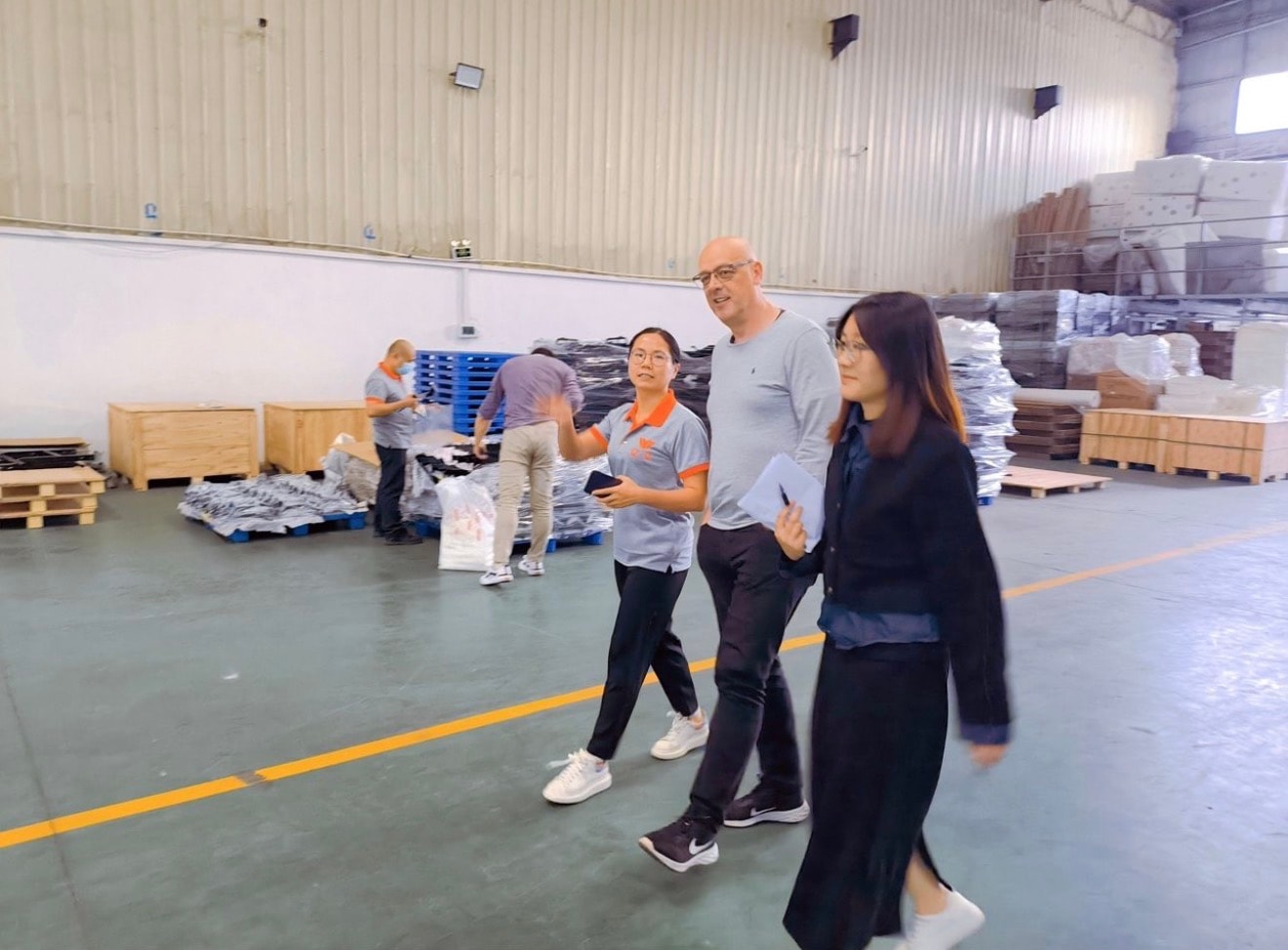
There is no substitute for visiting a factory before committing to significant production. A factory visit allows you to verify that the supplier is who they say they are, assess their equipment and workforce, observe their quality systems in practice, and meet the people who will actually be managing your production.
If you cannot visit yourself, a professional factory audit conducted by someone with relevant manufacturing experience is the next best option. An audit should cover company identity, production equipment, manufacturing processes, quality systems, workforce, capacity, and existing production.
A factory audit reduces risk. It does not eliminate it. A factory that performs well during an audit can still have problems during production — which is why production monitoring and inspection remain important.
Samples and Prototypes
Before committing to a production order, obtain samples. For most products, this means a pre-production sample manufactured to your specification, which you review and approve before production begins.
A good sample is encouraging. It is not, however, a guarantee of mass-production quality.
Production samples are typically made carefully, often by skilled workers who know the sample is being scrutinised. Mass production involves different pressures — speed, volume, material batches, shift changes. Problems that do not appear in a sample can appear in production.
This is why agreeing approved standards before production — and monitoring production against those standards — matters.
Agreeing Approved Standards
Before production begins, agree in writing what constitutes an acceptable product. This means:
- Approved samples retained by both parties
- Written specification covering critical dimensions, appearance standards, and functional requirements
- Agreed defect classifications — what is a critical defect, a major defect, a minor defect
- Packaging specification
Having agreed standards in place makes quality inspections objective. Without them, disputes about whether goods are acceptable become arguments about opinion rather than facts.
Production Monitoring and Quality Inspections
For anything beyond a simple repeat order from a well-established supplier, some form of production monitoring is advisable. This can range from periodic factory visits during production to formal in-process inspections at defined production milestones.
A pre-shipment inspection — conducted before goods are loaded — is the last opportunity to identify problems before they become your problem in the UK. A professional inspection should check quantity, product identity, dimensions, appearance, workmanship, function, labelling, and packaging against the agreed specification.
Warning Signs When Selecting Manufacturers
After more than 25 years of working with Chinese factories, certain patterns recur. Be cautious when:
- A supplier is reluctant to allow a factory visit or audit
- Quotations arrive very quickly without any technical questions
- The factory claims to manufacture products across an implausibly wide range of categories
- Payment terms are unusual — particularly demands for full payment upfront
- Communication is slow, vague, or inconsistent
- The supplier cannot provide references or examples of similar work
- Bank account details change unexpectedly
None of these individually proves a problem. Together, they warrant careful investigation before committing.
Working With a China Sourcing Agent
For UK businesses without in-country experience or the ability to visit factories, working with a China sourcing agent or a UK China sourcing partner can provide access to supplier networks, factory assessment capability, production monitoring, and quality inspection — all managed from China rather than from a desk in the UK.
The value of having people physically present in China is that problems can be investigated directly. When a factory reports that a quality issue has been resolved, someone can go and verify that it has.
Need Help Finding a Manufacturer in China?
Sauce Asia has worked with Chinese manufacturers since 1999 and supports UK businesses with supplier sourcing, factory audits, production management, quality inspection, consolidation and shipping.
If you have a product, drawing or specification you would like manufactured in China, contact Sauce Asia to discuss the project. You may also find our guide on how much it costs to import from China to the UK useful before you start.
Colin Moore has worked with Chinese manufacturers since 1999 and leads Sauce Asia's client relationships and sourcing strategy. Sauce Asia supports UK businesses with supplier sourcing, manufacturing, factory audits, production management, quality inspection and shipping from China.