Alibaba vs a China Sourcing Agent: Which Is Better?
Alibaba and other online platforms are genuinely useful tools for finding Chinese suppliers. But for more complex sourcing, they have real limitations. Here is an honest comparison.

Alibaba is the world's largest B2B trading platform and one of the most widely used tools for finding Chinese suppliers. It is also, in my experience, frequently misunderstood — both by buyers who treat it as a complete sourcing solution and by sourcing professionals who dismiss it entirely.
The honest answer to "Alibaba or a sourcing agent?" is: it depends on what you are trying to do.
Where Alibaba and Online Platforms Are Genuinely Useful
Online sourcing platforms — Alibaba, Global Sources, Made-in-China and others — have real strengths that should not be underestimated.
Finding potential suppliers. For almost any product category, these platforms will return dozens or hundreds of potential suppliers quickly. That is genuinely valuable as a starting point.
Market research. Browsing supplier listings gives you a reasonable sense of what is available, what the market looks like, and what indicative pricing might be. Before approaching suppliers directly, spending time on Alibaba is a sensible first step.
Comparing indicative pricing. Getting rough price indications from multiple suppliers helps establish a realistic cost range before you invest time in detailed quotations.
Finding common products. For standard, off-the-shelf products — packaging materials, basic components, commodity items — online platforms can be an efficient way to find and compare suppliers.
Initial supplier conversations. The messaging tools on these platforms allow you to have initial conversations with suppliers, ask basic questions, and get a feel for their responsiveness and communication.
The Limitations of Online Platforms for More Complex Sourcing
Where online platforms fall short is in everything that happens after you have found a list of potential suppliers.
Verifying who actually manufactures the product. A supplier profile on Alibaba tells you what a company wants you to believe about them. It does not tell you whether they are a genuine manufacturer or a trading company, whether the factory photographs on their profile are actually their factory, or whether the products they show are actually made in-house.
Factory capability. A professional-looking profile does not tell you whether a factory has the equipment, skills, and capacity to manufacture your specific product to your specification. A factory that makes simple pressed-metal parts is not automatically capable of manufacturing precision CNC components.
Subcontracting. Many suppliers on online platforms subcontract some or all of their production. Without visiting the factory or conducting an audit, you may have no idea who is actually making your product.
Technical communication. For products with detailed specifications, engineering drawings, or tight tolerances, the quality of technical communication matters enormously. Online platforms provide a messaging tool; they do not provide an experienced person who can review drawings, ask the right questions, and identify potential manufacturing problems before production begins.
Production monitoring. Once you have placed an order, online platforms have no role in what happens in the factory. Whether production is on schedule, whether the right materials are being used, whether quality is being maintained — none of this is visible from a platform.
Quality control and inspections. A pre-shipment inspection requires someone to physically visit the factory and check the goods against the specification. No online platform provides this.
Problem resolution. When something goes wrong during production — and at some point, something will — resolving it requires direct communication with the factory, often in Mandarin or Cantonese, and sometimes a physical visit. An online platform cannot help with this.
Consolidation and shipping. If you are sourcing from multiple suppliers, consolidating shipments and managing freight requires active coordination. This is not something an online platform handles.
Online Platforms as Part of a Professional Sourcing Process
The most useful way to think about Alibaba and similar platforms is as a research and discovery tool — one step in a broader sourcing process, not a complete solution.
A professional sourcing process might use online platforms to identify potential suppliers, then follow up with factory visits or audits, detailed technical discussions, sample evaluation, production monitoring, and quality inspection. The platform gets you a list of names; everything that determines whether those suppliers are actually suitable happens offline.
When a China Sourcing Agent Adds Value
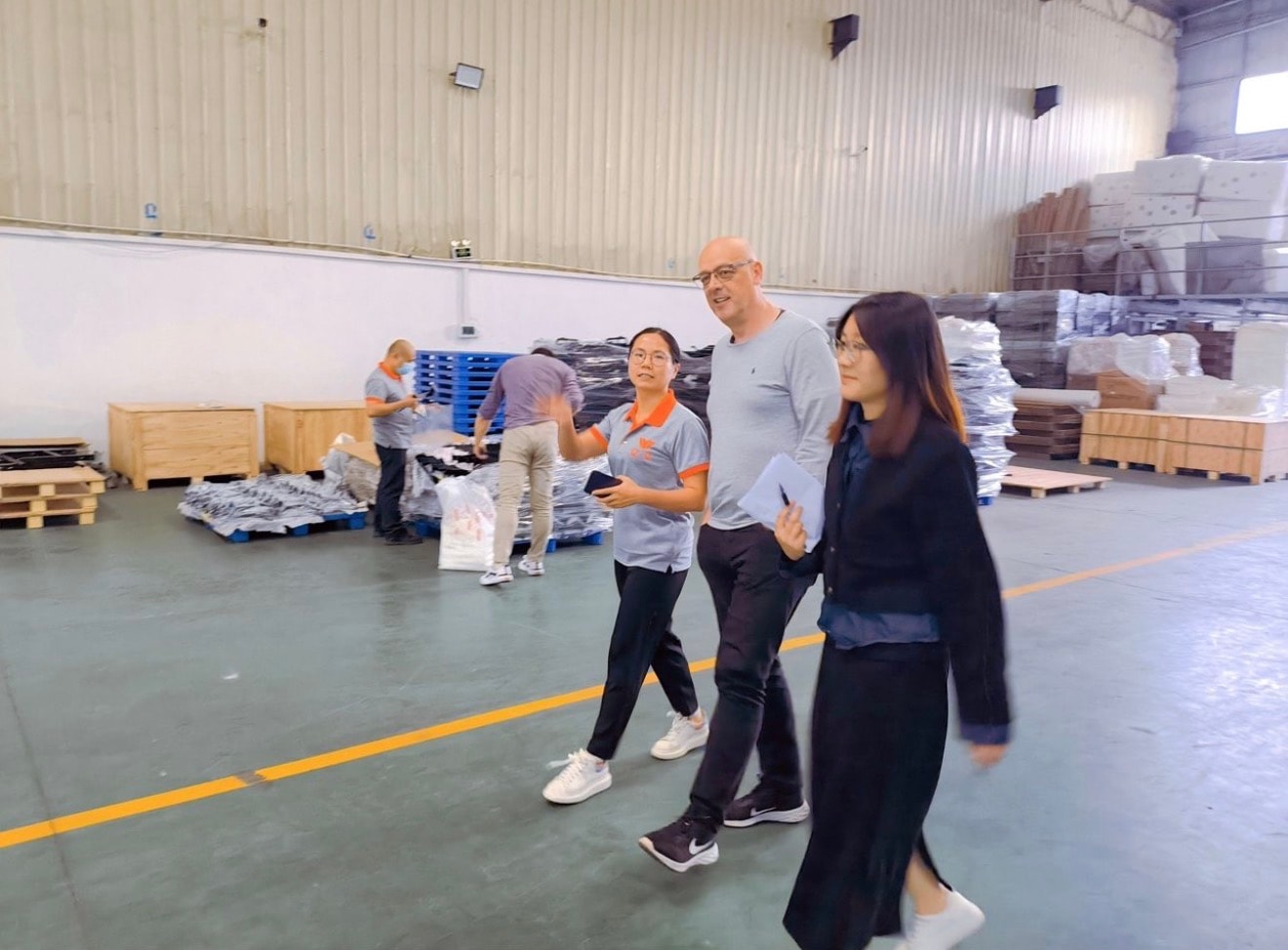
A China sourcing agent with people physically located in China can provide capabilities that an online platform cannot:
- Factory visits and audits — assessing whether a supplier is genuinely capable before you commit
- Technical communication — reviewing drawings, discussing specifications, identifying potential problems
- Production monitoring — visiting factories during production rather than waiting for finished goods
- Quality inspections — checking goods against specification before shipment
- Problem resolution — being physically present when problems arise, rather than managing them by email from the UK
- Consolidation — combining shipments from multiple suppliers into a single container
For straightforward, low-risk purchases of standard products, the overhead of a sourcing agent may not be justified. For complex products, precision components, large orders, or situations where quality problems would be costly, having experienced people on the ground in China can make a significant difference to the outcome.
The question is not really "Alibaba or a sourcing agent?" — it is "what level of support does this particular sourcing project require?"
Related Articles
- How to Find a Reliable Manufacturer in China
- How to Verify a Chinese Supplier Before Paying a Deposit
- China Factory Audit Checklist: What UK Buyers Should Check
Considering a China Sourcing Agent?
Sauce Asia has worked with Chinese manufacturers since 1999. We combine UK-based client support with an experienced team on the ground in China, covering supplier sourcing, factory audits, production management, quality inspection, consolidation and shipping.
If you are looking for a UK China sourcing partner with people physically on the ground in China, contact Sauce Asia to discuss your requirements.
Colin Moore has worked with Chinese manufacturers since 1999 and leads Sauce Asia's client relationships and sourcing strategy. Sauce Asia supports UK businesses with supplier sourcing, manufacturing, factory audits, production management, quality inspection and shipping from China.