How to Verify a Chinese Supplier Before Paying a Deposit
Paying a deposit to a Chinese supplier you have not properly verified is one of the most avoidable risks in China sourcing. This guide covers the due diligence steps that matter most.

Paying a deposit to a supplier you have not properly verified is one of the most avoidable risks in China sourcing. Once money has left your account, your leverage changes significantly. The time to conduct due diligence is before you commit financially, not after.
This guide covers the key verification steps for UK businesses considering a new Chinese supplier.
1. Verify Company Identity
Start with the basics. Confirm that the company exists, is legally registered, and is who they say they are.
- Request the company's business licence (营业执照) — this is a legal requirement for all registered Chinese businesses and should be provided without hesitation
- Check the company name, registration number, registered address, and business scope
- Verify that the business scope covers the products you intend to source
- Confirm the legal representative's name
Chinese company registration information can be cross-referenced through official Chinese business registration databases. If a supplier is reluctant to provide their business licence, that is a significant warning sign.
2. Confirm the Factory Location
The address on a company's website or Alibaba profile is not always the address of the factory.
- Ask for the factory address and confirm it matches the business licence
- Use mapping tools to verify that the address corresponds to an industrial area
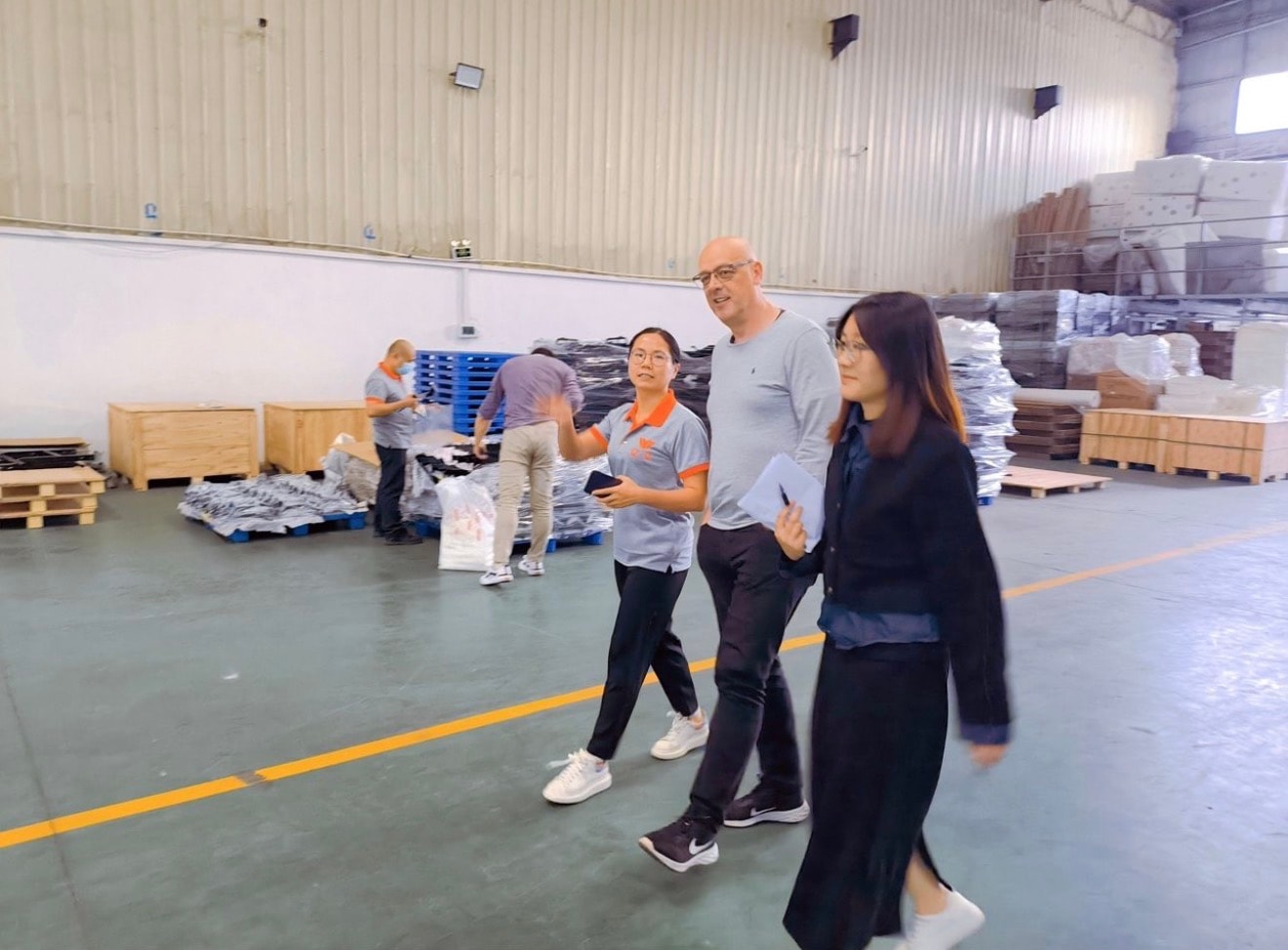
- If possible, visit the factory or arrange for someone to visit on your behalf
A supplier who is reluctant to confirm their factory address, or whose address turns out to be a residential building or office block, warrants careful investigation.
3. Establish Who Actually Manufactures the Product
As discussed in our article on finding reliable manufacturers in China, many suppliers on online platforms are trading companies rather than factories.
- Ask directly: do you manufacture this product in your own factory?
- Request photographs of the production area, equipment, and workers
- Ask to see products currently in production
- If possible, visit the factory
A genuine manufacturer will answer these questions readily. Evasive or inconsistent answers are a warning sign.
4. Verify Manufacturing Facilities and Equipment
Even if the supplier is a genuine manufacturer, you need to establish whether they have the equipment and capability to produce your specific product.
- Request photographs or video of the relevant production equipment
- Ask about the specific processes involved in manufacturing your product
- Establish whether any processes are subcontracted
- For precision or technical products, ask about measuring and inspection equipment
A factory audit conducted by someone with relevant manufacturing experience provides a much more thorough assessment than photographs alone.
5. Check Quality Systems
- Does the factory have a quality management system?
- Are there defined inspection procedures?
- What measuring and inspection equipment do they have?
- How do they handle non-conforming products?
ISO 9001 certification is worth noting but should not be treated as a guarantee of quality. The certificate tells you that a quality management system exists; it does not tell you how effectively it is implemented.
6. Request Samples
Before placing a production order, request samples manufactured to your specification. Evaluate samples carefully against your requirements.
A supplier who is reluctant to provide samples, or who charges unusually high sample fees without any prospect of refund against an order, is worth approaching cautiously.
7. Check Relevant Certificates
For products that require regulatory compliance — CE marking, RoHS, REACH, product safety testing — ask for copies of relevant certificates or test reports.
Verify that certificates are genuine and that they relate to the specific product and supplier. Certificates can be fabricated or may relate to a different product or a different factory. If in doubt, contact the issuing body to verify.
8. Assess Export Experience
- Has the supplier exported to the UK or EU before?
- Are they familiar with UK import requirements for your product?
- Can they provide references from UK or European customers?
Export experience is not essential, but it reduces the risk of problems with documentation, labelling, and regulatory compliance.
9. Evaluate Communication
The quality of a supplier's communication before you place an order is often a reliable indicator of how they will communicate during production.
- Do they respond promptly and clearly?
- Do they ask sensible technical questions about your specification?
- Are their answers consistent?
- Do they communicate in a way that suggests genuine understanding of your requirements?
A supplier who asks no technical questions about a complex product specification may not have read it carefully.
10. Warning Signs
After more than 25 years of working with Chinese suppliers, certain patterns are worth taking seriously:
Reluctance to allow a factory visit or audit. A legitimate manufacturer has nothing to hide.
Unusually low prices. A price significantly below market rate may reflect lower-grade materials, a misunderstanding of the specification, or a supplier who will manage the margin later through quality compromises.
Pressure for unusually fast payment. Legitimate suppliers understand that buyers need time to conduct due diligence.
Requests for full payment upfront. Standard payment terms for new supplier relationships are typically 30% deposit, 70% before shipment. Demands for 100% upfront payment from an unverified supplier are a serious warning sign.
Unexpected changes to bank account details. This is a well-known fraud pattern. If a supplier's bank details change — particularly close to a payment date — verify the change through a separate, independently verified communication channel before transferring any money. Do not rely solely on email.
Inconsistent information. If the company name, address, or contact details are inconsistent across different documents or communications, investigate carefully.
No Single Check Eliminates Risk
It is important to be realistic: no combination of due diligence steps eliminates all risk. A supplier can pass every check and still have problems during production. The purpose of due diligence is to reduce the probability of serious problems, not to guarantee a perfect outcome.
For UK businesses without the ability to visit factories in China, working with a China sourcing agent that has people on the ground can provide access to factory verification and audit capability that is difficult to replicate from a desk in the UK. Sauce Asia provides this as part of a complete UK-managed China sourcing service — from supplier verification and factory assessment through to production, quality inspection and UK delivery.
Related Articles
- China Factory Audit Checklist: What UK Buyers Should Check
- How to Find a Reliable Manufacturer in China
- Alibaba vs a China Sourcing Agent: Which Is Better?
Need Help Verifying a Chinese Supplier?
Sauce Asia can conduct factory visits and audits in China on behalf of UK businesses. Our China-based team can assess suppliers, verify manufacturing capability, and provide honest assessments before you commit to production.
Contact Sauce Asia to discuss your requirements.
Colin Moore has worked with Chinese manufacturers since 1999 and leads Sauce Asia's client relationships and sourcing strategy. Sauce Asia supports UK businesses with supplier sourcing, manufacturing, factory audits, production management, quality inspection and shipping from China.