
China Manufacturer vs Trading Company: A Guide for UK Buyers
A supplier saying "we are the factory" does not prove that it manufactures your product. Here is how UK buyers can distinguish a genuine Chinese manufacturer from a trading company and decide whether the difference matters.
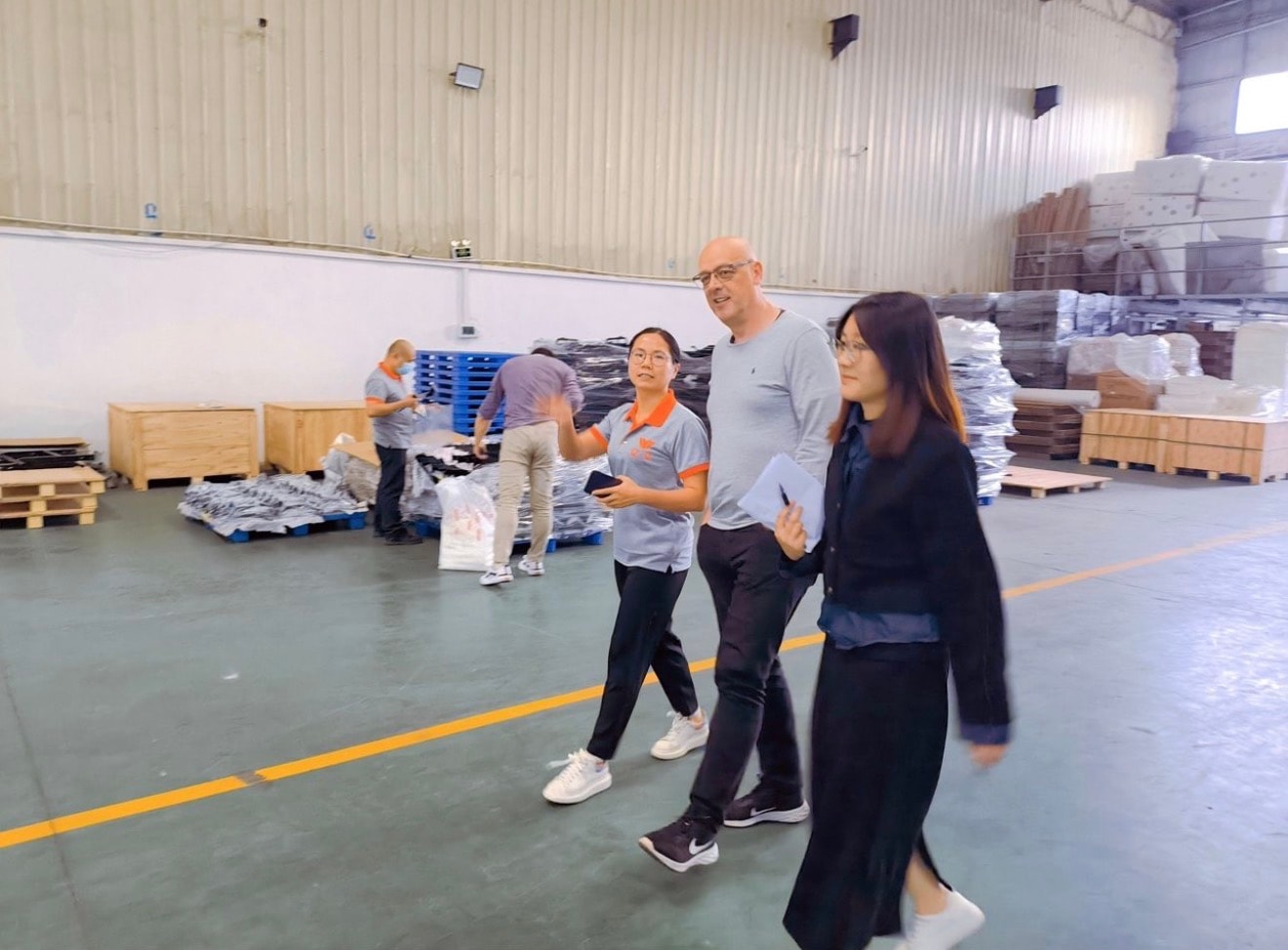
One of the first questions UK buyers ask a potential Chinese supplier is: "Are you the factory?"
The answer is almost always yes.
Unfortunately, the answer alone proves very little. A sales company may describe itself as a manufacturer, a factory may use a separate export company and several related businesses may operate from the same site.
There are also legitimate trading companies that provide a valuable service—and factories that make poor suppliers despite owning plenty of machinery.
I have worked with Chinese manufacturers since 1999. The important question is not simply whether somebody calls themselves a factory. It is whether you know exactly who you are dealing with, who will manufacture the goods, which processes will be subcontracted and who has practical control over quality, price and delivery.
Is a Chinese Trading Company Necessarily a Bad Supplier?
No.
A capable and transparent trading company can be useful when it provides something the buyer genuinely needs. This might include:
- Combining products from several specialist factories
- Managing smaller orders that individual factories will not accept
- Providing experienced export administration
- Coordinating packaging and consolidation
- Offering specialist knowledge of a product category
- Communicating effectively between the buyer and several manufacturers
The problem arises when the trading relationship is hidden.
A buyer may believe it is discussing technical requirements directly with the manufacturer when every question is actually passing through an intermediary. That can lead to slower decisions, misunderstood specifications, unclear responsibility and difficulty resolving defects.
An undisclosed intermediary may also move an order between factories without the buyer's knowledge.
The objective is transparency. If a trading company is involved, the buyer should understand its role, know where the goods will be manufactured and establish how production and quality will be controlled.
The Three Supplier Structures UK Buyers Commonly Encounter
1. A direct manufacturer
The company quoting and contracting with the buyer owns or operates the relevant factory and carries out the principal manufacturing processes.
Some secondary operations may still be subcontracted. Surface finishing, heat treatment, printing, plating, specialist testing and packaging are common examples.
Direct factory communication can provide better access to engineers, production managers and quality teams, particularly for custom or technically demanding products.
2. A trading company or sourcing intermediary
The company sells products manufactured by one or more independent factories.
The trading company may manage quotations, communication, payment, inspection and export documentation. Its effectiveness depends on its product knowledge, transparency and ability to control the actual manufacturer.
3. A manufacturer using a related export company
A genuine manufacturer may use a separate company to receive export orders and payments.
The factory and export business might share ownership, directors or premises, but they remain different legal entities.
This arrangement is not automatically suspicious. However, the commercial relationship should be documented and understood before money is transferred.
The contract, invoice, bank beneficiary, business licences and factory details should provide a coherent explanation of which company is responsible for each part of the transaction.
Why Supplier Websites and Marketplace Profiles Can Mislead
It is easy to create the appearance of being a manufacturer online.
A supplier profile may contain factory photographs, videos, machinery lists, inspection certificates and production claims. Those materials might be genuine, but they do not necessarily belong to the company presenting them.
English trading names are also unreliable identifiers. They may be marketing names rather than registered legal names, and similar English names can be used by unrelated companies.
Marketplace badges and remote verification reports can provide useful information, but they are not a substitute for confirming the legal entity and assessing the real production site.
Even a good product sample does not prove that the supplier owns a factory. A trading company can obtain an excellent sample from another manufacturer.
How to Check Whether a Chinese Supplier Is the Manufacturer
1. Obtain the exact Chinese legal company name
Ask for a clear copy of the supplier's current Chinese business licence.
The legal Chinese name is more important than the English name shown on a website or quotation. Company-registry searches should be performed using the Chinese legal name or the Unified Social Credit Code shown on the licence.
The official National Enterprise Credit Information Publicity System can be used to examine Chinese company-registration information.
A registration check can help confirm that the entity exists and whether its recorded status and details are consistent with what the supplier has told you.
However, registration establishes legal identity. It does not prove that the company has the equipment, employees or experience required to manufacture your product.
2. Examine the registered business scope
The business scope can indicate whether the company is registered for manufacturing, trading, importing, exporting or related activities.
Treat this as one piece of evidence rather than a final answer. Business-scope wording can be broad and does not demonstrate that a particular process is carried out at the claimed premises.
A company registered for manufacturing may still outsource much of its production. A trading company may also belong to the same group as a genuine factory.
3. Compare the registered and production addresses
Ask for:
- The registered company address
- The factory address
- The export company address, if different
- The address where an inspection would take place
- The location from which the goods will be collected
Different addresses can have a reasonable explanation. The important point is that the explanation should be clear and capable of verification.
If the supplier claims to manufacture in one city but the business licence, certificates and proposed inspection location all point to unrelated premises elsewhere, further investigation is required.
4. Check the quotation, contract and bank beneficiary
Identify:
- The legal company issuing the quotation
- The company named in the purchase agreement
- The company issuing the invoice
- The beneficiary receiving the payment
- The company responsible for exporting the goods
These names should either match or have a properly explained commercial relationship.
Do not accept an unexpected change to a different company or personal bank account without independently verifying why it has happened.
Confirm payment changes using known contact details rather than relying only on the email or message requesting the new instructions.
5. Establish which processes happen in-house
Ask the supplier to list each important production stage and say whether it is performed internally or subcontracted.
For example, a metal product might involve:
- Raw-material purchasing
- Laser cutting
- CNC machining
- Pressing or forming
- Welding
- Grinding
- Plating or powder coating
- Assembly
- Testing
- Packing
Subcontracting is normal in Chinese manufacturing and is not automatically a problem.
What matters is knowing which supplier performs each critical operation and how quality is controlled as materials and components move between businesses.
If the company claims every process is performed in-house, the equipment and factory layout should support that statement.
6. Arrange an on-site factory assessment
A physical factory visit provides evidence that a website cannot.
The assessment should look beyond the reception area and showroom. Relevant checks can include:
- Production equipment needed for the proposed goods
- Whether the machinery is operating
- Workforce and production activity
- Raw materials and work in progress
- Tooling, jigs and fixtures
- Machinery condition and maintenance
- Quality-control stations and measuring equipment
- Storage and product-identification controls
- Treatment of rejected or non-conforming goods
- Production records and traceability
- Current workload and available capacity
- Processes being sent to subcontractors
A useful visit is not simply a guided tour.
The assessor should compare what is seen on the factory floor with the supplier's quotations, capability claims and proposed manufacturing process.
Sauce Asia's factory-audit service in China can assess whether a supplier is a manufacturer or trading company, its relevant equipment and processes, quality systems, capacity and use of subcontractors.
7. Test the supplier's technical knowledge
People working directly with a production process should normally be able to discuss practical matters such as:
- Material grades and tolerances
- Tooling requirements
- Production limitations
- Likely defect risks
- Testing methods
- Finishing options
- Packaging constraints
- Realistic output and lead times
A salesperson may not personally know every technical answer. However, they should be able to involve the appropriate engineer, production manager or quality representative.
Repeatedly vague answers can indicate that the person quoting has limited access to the actual manufacturer.
8. Check certificates carefully
A certificate should not be accepted merely because the supplier sends a PDF.
Check:
- The legal company name
- Factory address
- Certificate number
- Issuing organisation
- Issue and expiry dates
- Products or processes covered
- Applicable standard
- Whether the certificate can be verified with the issuer
A valid quality-management certificate does not prove that a particular product complies with UK regulations.
Product-specific requirements, testing and technical documentation still need separate consideration.
The UK Office for Product Safety and Standards advises businesses that manufacture, import, distribute or sell products in the UK to identify and comply with the regulations applying to their particular goods.
9. Confirm capacity using evidence
Statements such as "our monthly capacity is 100,000 units" need context.
Capacity depends on product complexity, equipment, shifts, staffing, tooling, raw-material availability and existing orders.
Ask how the figure was calculated and what capacity is genuinely available during the proposed production period.
A factory may be genuine but overloaded. That can be just as damaging to a delivery schedule as dealing with an unsuitable intermediary.
Warning Signs That Deserve Further Investigation
No single warning sign proves that a supplier is dishonest. However, a combination of inconsistencies should prompt deeper checks.
Watch for:
- Refusal to provide the Chinese business licence
- Providing only an English-language certificate
- A legal company name that changes between documents
- Payment requested to an unexplained third party or individual
- Factory photographs appearing on several unrelated websites
- A product range covering numerous unrelated industries
- Refusal to allow an independent factory visit
- An inspection address different from the claimed factory
- Certificates issued to another company
- No relevant raw materials or work in progress at the factory
- Claimed machinery that cannot be seen or demonstrated
- Evasive answers about subcontracting
- Sales staff unable to arrange communication with technical personnel
- Capacity claims unsupported by the site, workforce or equipment
Manufacturer or Trading Company: Which Is Better?
There is no universal answer.
A direct manufacturer is often preferable when the order involves:
- Custom engineering
- Tight tolerances
- Proprietary tooling
- Frequent design revisions
- Regular repeat production
- Direct technical communication
- Strong process control
A transparent trading company may be commercially appropriate when:
- Several different product types are required
- The order must be divided between specialist factories
- Volumes are too low for direct factory minimums
- Consolidation and export coordination add genuine value
- The intermediary has strong product knowledge and established factory relationships
The name attached to the business model matters less than transparency, capability and control.
A poor factory is not better than a capable trading company simply because it owns machines. Equally, a polished trading company should not be mistaken for the manufacturer when the buyer requires direct control over technical production.
What a Factory Audit Can and Cannot Prove
A factory audit can provide evidence about the supplier at the time of the visit, including its identity, premises, equipment, workforce, systems, capacity and apparent suitability.
It cannot guarantee that every future production batch will be correct.
After appointing a supplier, the buyer may still require:
- A complete written specification
- Approved samples
- Production milestones
- In-process monitoring
- Testing appropriate to the product
- Pre-shipment inspection
- Corrective action and reinspection when necessary
A supplier audit evaluates the business and its capability. A product inspection checks whether the actual goods meet the agreed requirements. They perform different jobs.
For a wider due-diligence checklist, read How to Verify a Chinese Supplier Before Paying a Deposit.
Remember the UK Importer's Responsibilities
Whether goods come directly from a factory or through a trading company does not remove the UK importer's responsibilities.
The regulations vary by product. Depending on the goods, requirements may cover safety, testing, marking, labelling, traceability, instructions and technical documentation.
Determine the applicable UK requirements before approving the product for manufacture—not after the container has arrived.
Supplier checks, factory audits and quality inspections can help manage manufacturing risk, but they are not replacements for appropriate product-compliance advice and testing.
How Sauce Asia Verifies and Manages Chinese Manufacturers
Sauce Asia has worked with Chinese manufacturers since 1999.
Our permanent team in China can support UK businesses by:
- Searching for suitable manufacturers
- Confirming supplier and factory identities
- Visiting and assessing production sites
- Comparing quotations and manufacturing capability
- Managing samples and product development
- Coordinating manufacturing
- Carrying out in-process and pre-shipment quality inspections
- Arranging freight and customs-clearance support
- Delivering goods into the customer's UK warehouse
Where practical, we work directly with suitable manufacturers. Where a trading company has a legitimate commercial role, that structure should be understood rather than hidden.
Customers can use Sauce Asia for a complete sourcing and manufacturing project or ask us to assess a supplier they have already found.
Read more about our UK China sourcing-partner service, China manufacturing support and shipping from China to the UK.
Frequently Asked Questions
Is it safe to buy from a Chinese trading company?
It can be. A transparent, experienced trading company may provide useful coordination and access to several factories. Confirm its legal identity, actual manufacturer, responsibilities, quality controls and payment arrangements before placing the order.
Does a marketplace verification badge prove that a supplier owns a factory?
Not necessarily. Marketplace checks and badges can provide useful information, but they do not replace verifying the Chinese legal entity, production address, equipment, workforce and manufacturing processes.
How can I check a Chinese business licence?
Obtain a clear copy showing the company's Chinese legal name and Unified Social Credit Code. Use those details to check the official National Enterprise Credit Information Publicity System. Registry information should then be compared with quotations, invoices, bank details and the actual factory.
Why might a genuine factory ask for payment to another company?
Some factories use a related export or group company to handle international sales. This can be legitimate, but the relationship should be explained and documented before payment.
Do not assume that two businesses are related simply because the supplier says they are.
Can Sauce Asia inspect a supplier that we found ourselves?
Yes. Sauce Asia can visit and assess a prospective supplier or factory found by the customer. The appropriate scope depends on the product, order value, technical risk and evidence required.
Are You Unsure Who Will Actually Manufacture Your Product?
If you have found a Chinese supplier but cannot establish whether it is the genuine manufacturer, send Sauce Asia the company name, website, quotation, proposed product and factory address.
Our China-based team can discuss the appropriate verification or factory-assessment work before you pay a deposit or commit to production.


