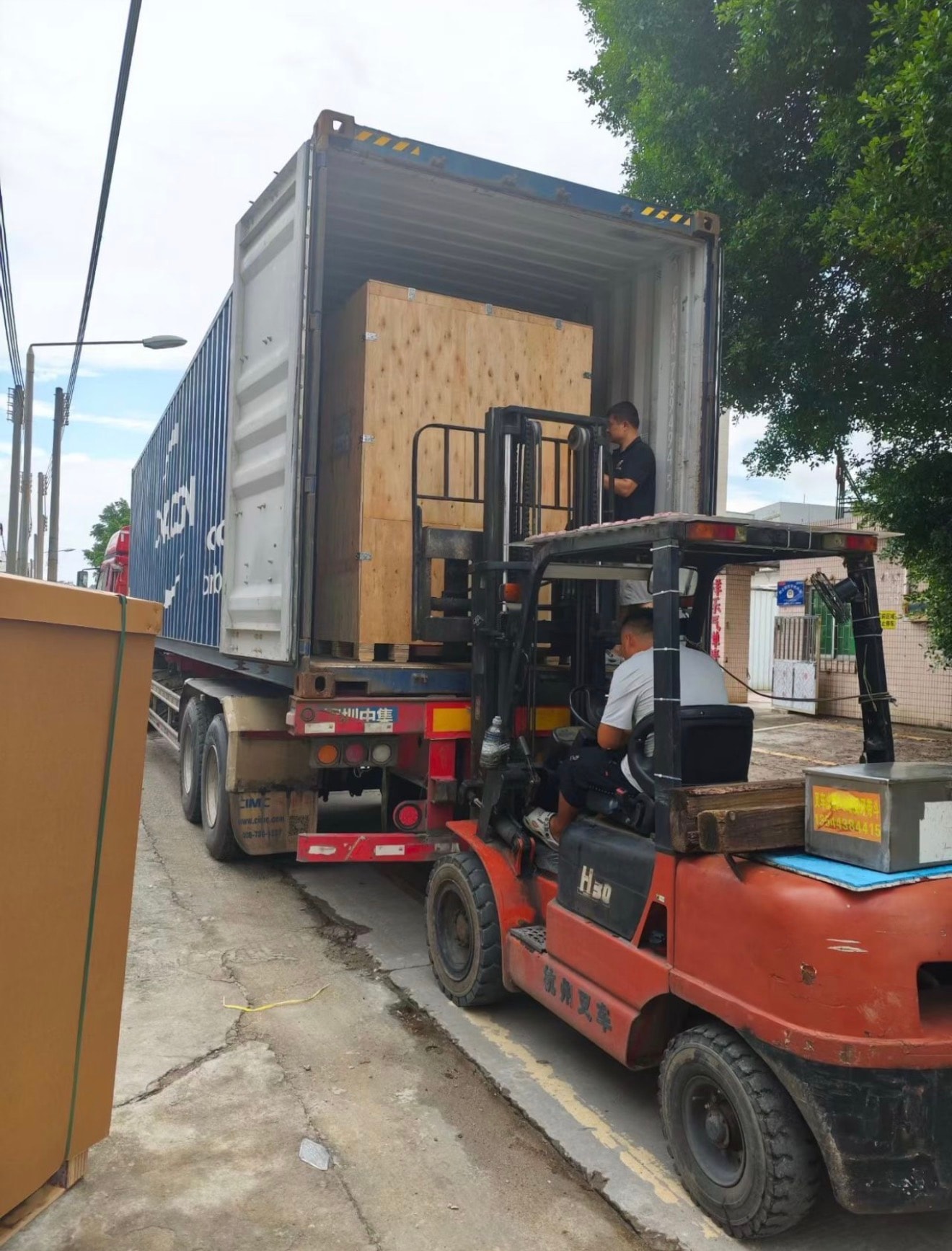
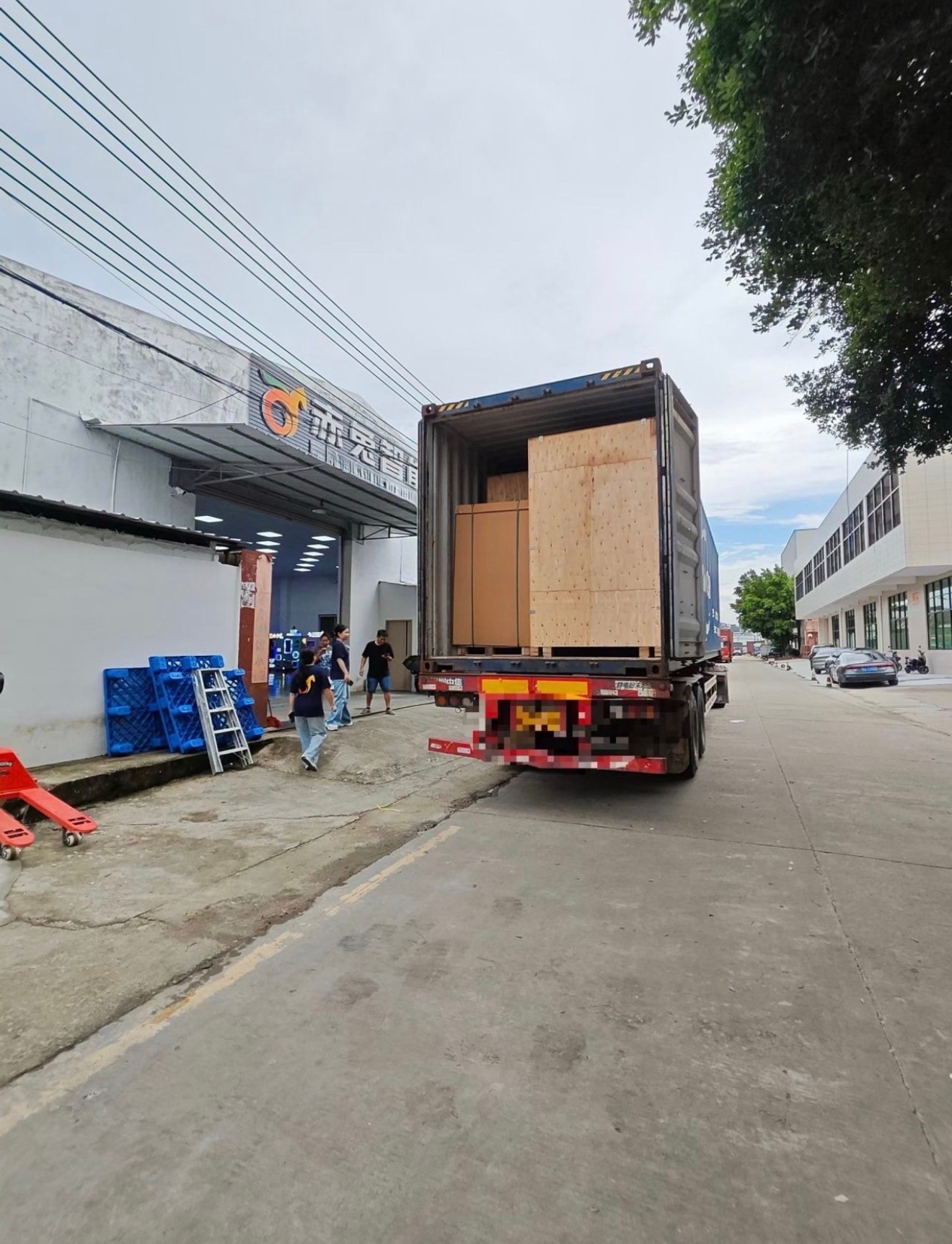
EXW, FOB or DDP From China? A Practical Guide for UK Importers
EXW, FOB and DDP quotations can appear to cover the same Chinese product while placing very different costs, responsibilities and risks on the UK buyer. This practical guide explains what each term means and what to check before ordering.

EXW, FOB and DDP quotations can appear to cover the same Chinese product while placing very different costs, responsibilities and risks on the UK buyer. Understanding what each term means — and what it leaves you to arrange — is one of the most practical steps a UK importer can take before placing an order.
This guide explains the main Incoterms used in China trade, compares EXW, FOB and DDP in detail, and sets out the checks worth making before you accept a quotation.
What Are Incoterms?
Incoterms (International Commercial Terms) are a set of standardised trade terms published by the International Chamber of Commerce. The current version is Incoterms 2020. Each term defines:
- which party — seller or buyer — arranges and pays for each stage of transport
- where risk transfers from seller to buyer
- which party handles export and import customs formalities
Incoterms do not determine when ownership of the goods passes. That is a matter for the contract of sale. They also do not cover payment terms, product specifications or liability for defective goods.
When a supplier quotes a price, the Incoterm used determines how much of the logistics chain is included in that price. A lower EXW price and a higher DDP price may represent the same total cost once all transport and customs charges are added — or they may not. The only way to know is to calculate the full landed cost under each term.
The Main Incoterms Used in China Trade
EXW — Ex Works
The supplier makes the goods available at their premises (factory, warehouse or other named place). The buyer arranges and pays for everything from that point: loading at the factory, export customs clearance in China, freight, insurance, UK import customs clearance, import duty, import VAT and delivery to the UK destination.
EXW places the maximum responsibility on the buyer. It is straightforward for the supplier but requires the buyer to have reliable freight and customs arrangements in place in China, which can be difficult without a local partner.
FCA — Free Carrier
The seller delivers the goods to a named place — typically a container freight station, inland container depot or the carrier's terminal. Risk transfers at that point. The seller handles export customs clearance. The buyer arranges and pays for the main freight, insurance, UK customs clearance, duty, VAT and delivery.
FCA is often a better fit than FOB for containerised shipments because the handover point aligns with how containers are actually moved. The ICC updated Incoterms 2020 to allow an FCA variant where the buyer's carrier issues an on-board bill of lading to the seller, which can help where letters of credit require such a document.
FOB — Free On Board
The seller delivers the goods on board the vessel at the named Chinese port and handles export customs clearance. Risk transfers when the goods are on board. The buyer arranges and pays for the main freight, insurance, UK customs clearance, import duty, import VAT and delivery.
FOB is one of the most widely used terms in China trade. It is familiar to most Chinese suppliers and freight forwarders. For containerised cargo, FCA may technically be more appropriate, but FOB remains the standard in many contracts. The important thing is that the written term matches the actual handover point.
CIF — Cost, Insurance and Freight
The seller pays for freight and insurance to the named destination port. Risk transfers when the goods are on board the vessel at the origin port — the same point as FOB. The buyer is responsible for unloading, port handling, UK customs clearance, import duty, import VAT and delivery.
CIF is sometimes used when the buyer wants the supplier to arrange freight and insurance, but it leaves significant costs and responsibilities on the buyer's side at the UK end. The insurance arranged by the seller under CIF meets only the minimum coverage required by Incoterms 2020, which may not be sufficient for the buyer's needs.
DAP — Delivered at Place
The seller delivers the goods to a named place in the destination country — for example, the buyer's warehouse — ready for unloading. The seller pays for freight and bears risk until delivery. The buyer handles import customs clearance, import duty and import VAT.
DAP is useful when the buyer wants the supplier or their freight forwarder to manage the main freight leg but is prepared to handle UK customs and tax obligations directly.
DDP — Delivered Duty Paid
The seller delivers the goods to the named destination, cleared for import, with all duties and taxes paid. DDP places the maximum responsibility on the seller. The buyer receives the goods at their premises with no further customs or freight obligations — in theory.
In practice, DDP quotations vary considerably in what they include. Some exclude VAT; others exclude certain terminal or handling charges. The named delivery place matters: DDP to a UK port is very different from DDP to the buyer's warehouse. Always obtain written confirmation of exactly what is and is not included.
EXW, FOB and DDP: A Practical Comparison
| EXW | FOB | DDP | |
|---|---|---|---|
| Who arranges China collection | Buyer | Seller | Seller |
| Who handles China export customs | Buyer | Seller | Seller |
| Who arranges main freight | Buyer | Buyer | Seller |
| Where risk transfers | Factory gate | On board vessel | Named delivery place |
| Who handles UK customs clearance | Buyer | Buyer | Seller |
| Who pays import duty and VAT | Buyer | Buyer | Seller |
| Who arranges UK delivery | Buyer | Buyer | Seller |
The table shows that EXW and FOB leave most of the logistics and customs responsibility with the buyer. DDP transfers those responsibilities to the seller, but at a price — and with the caveats about scope noted above.
For most UK importers buying from China, FOB is a practical middle ground: the supplier handles export formalities and loads the goods, and the buyer appoints a UK freight forwarder to manage the main freight, UK customs clearance and delivery. This gives the buyer control over the freight cost and the choice of customs broker, while keeping the supplier's obligations clear.
How to Choose an Incoterm
The right Incoterm depends on several factors:
Your logistics capability. If you have an established relationship with a freight forwarder and customs broker, FOB or FCA gives you control over the freight cost and the customs process. If you do not, DDP may be simpler — provided you verify what is included.
The supplier's capability. Some Chinese suppliers are experienced exporters with reliable freight partners. Others are not. A supplier who quotes DDP but has limited export experience may create problems at the UK border.
The value and nature of the goods. For high-value goods, controlling the insurance and freight arrangements directly may be preferable. For low-value or straightforward shipments, DDP may be convenient.
Your ability to reclaim import VAT. UK VAT-registered businesses can normally reclaim import VAT. If the supplier pays import VAT under DDP, the buyer may not be the importer of record and may not be able to reclaim it. This is worth checking with your accountant or customs broker before agreeing DDP terms.
The letter of credit. If payment is by letter of credit, the required shipping documents — particularly the bill of lading — may influence which Incoterm is practical.
Landed Cost: What You Are Actually Paying
The landed cost is the total cost of getting goods from the Chinese factory to your UK warehouse. It typically includes:
- Product cost — the ex-works price of the goods
- Tooling and packaging — if applicable
- Collection and origin handling in China — truck to the port or freight station, container stuffing, export documentation
- Main freight — sea freight (FCL or LCL) or air freight
- Insurance — cargo insurance for the journey
- UK terminal handling — port charges, container handling at the UK terminal
- UK customs clearance — customs broker fees, import entry
- Import duty — calculated on the customs value at the applicable commodity-code rate
- Import VAT — currently 20% on the customs value plus duty (recoverable for VAT-registered businesses)
- UK delivery — trucking from the port or deconsolidation depot to your warehouse
- Inspection — pre-shipment inspection or factory QC costs
- Storage, demurrage or detention — if goods are held at the port or container is returned late
Understanding the cost of importing from China to the UK in full — not just the product price — is essential for accurate margin calculations and pricing decisions.
Customs Value and How Transport Costs Affect It
Import duty and import VAT in the UK are calculated on the customs value of the goods. For most shipments, the customs value is based on the transaction value — the price paid for the goods — adjusted to include certain costs incurred up to the point of entry into the UK.
Under HMRC guidance, the customs value normally includes the cost of transport and insurance up to the point of entry into the UK customs territory. This means that under FOB terms, the freight and insurance costs from the Chinese port to the UK port are typically added to the product price to arrive at the customs value. Under EXW terms, the costs from the factory to the UK port — including collection, export handling, freight and insurance — are included.
The practical effect is that a lower EXW product price does not necessarily result in a lower customs value or lower duty. The freight and other costs added to the customs value may offset the lower product price.
Import VAT is calculated on the customs value plus the import duty. UK VAT-registered businesses can normally reclaim import VAT through their VAT return, but the cash-flow impact of paying it upfront should be factored into planning.
For detailed guidance, see HMRC's customs value guidance and the UK Government's guidance on importing goods into the UK.
Seven Checks Before Accepting a Quotation
1. Confirm the precise Incoterm and named place
A quotation that says "FOB" without a named port, or "DDP" without a named delivery address, is incomplete. The named place is part of the term. "FOB Shenzhen" and "FOB Shanghai" are different obligations. "DDP your warehouse" and "DDP Felixstowe" are very different for the buyer.
2. Get inclusions in writing
Ask the supplier or freight forwarder to list every cost that is and is not included in the quoted price. This is particularly important for DDP quotations, where the scope can vary significantly.
3. Confirm the collection address
Under EXW, the buyer must arrange collection from the supplier's premises. Confirm the full address, including whether it is a factory, warehouse or third-party logistics facility, and whether the supplier will assist with loading.
4. Obtain final packing data
Freight costs for sea and air shipments are based on the greater of actual weight and volumetric weight, and on the number and dimensions of cartons or pallets. Obtain confirmed packing data before accepting a freight quotation, as estimates based on product weight alone can be significantly wrong.
5. Understand where risk transfers
Know the point at which the goods become your responsibility. If the goods are damaged or lost before that point, the seller bears the risk. After that point, you need adequate insurance in place.
6. Clarify importer of record, EORI and customs arrangements
The importer of record is the party legally responsible for the import declaration and for paying duty and VAT. Under FOB and EXW terms, this is normally the UK buyer. You will need an EORI (Economic Operators Registration and Identification) number and a customs broker or freight forwarder authorised to act on your behalf. Under DDP, the seller or their agent is typically the importer of record — but confirm this, as it affects your ability to reclaim import VAT.
7. Coordinate freight with inspection
If you are arranging a pre-shipment inspection, coordinate the inspection date with the freight booking. Goods that pass inspection and are ready to load should not be held at the factory or warehouse while a freight booking is confirmed. Equally, a freight booking should not be made before the inspection is complete and any remedial work has been done.
How Sauce Asia Supports UK Importers
Shipping from China to the UK involves more than choosing a freight forwarder. Sauce Asia supports UK businesses at every stage of the supply chain:
- Sourcing and supplier identification — finding the right factory for your product and verifying that the supplier is a genuine manufacturer
- China manufacturing support — managing production, tooling and sampling
- Factory audits and quality inspections — checking goods before they leave China, including pre-shipment inspections and production monitoring
- Freight coordination — working with established freight partners for sea and air shipments
- Customs clearance coordination — working with customs brokers to manage UK import entries, duty and VAT
- UK warehouse delivery — arranging final delivery to your warehouse or fulfilment centre
As a UK China sourcing partner, we provide a single point of contact for the full journey from factory to UK warehouse, with transparent cost breakdowns at each stage.
Ask Us to Review Your China Import Quote
If you have received a quotation from a Chinese supplier and want to understand what it includes, what it leaves you to pay, and whether the Incoterm is appropriate for your shipment, we are happy to review it with you.
Ask Us to Review Your China Import Quote
Frequently Asked Questions
Is EXW cheaper than FOB?
The EXW price is normally lower because the supplier quotes only for the goods at their premises. However, the complete journey from the factory to a UK warehouse may not cost less under EXW. The buyer must arrange and pay for all collection, export handling, freight, insurance, UK customs clearance, duty, VAT and delivery. When those costs are added, the total landed cost may be similar to or higher than a FOB or DDP quotation that bundles some of those elements.
Is FOB or FCA better for container shipping?
FCA (Free Carrier) may better reflect how container shipments actually work, because risk and responsibility transfer when the goods are handed to the carrier at a named place — typically the container freight station or terminal — before the vessel is loaded. FOB technically transfers risk at the ship's rail, which does not align well with containerised logistics. In practice, FOB remains widely used in China trade. Whichever term is agreed, the written contract should match the actual handover point to avoid disputes.
What does CIF normally exclude at the UK end?
Under CIF, the supplier pays for freight and insurance to the named destination port. The UK buyer is normally responsible for unloading and port handling at the UK terminal, customs clearance, import duty, import VAT, and onward delivery to the warehouse or final destination. CIF does not cover the full door-to-door journey.
What should I check in a DDP quotation?
DDP places the maximum responsibility on the seller, but the scope of what is included varies. Before accepting a DDP quotation, verify exactly which costs are covered: freight, insurance, UK customs clearance, import duty, import VAT, terminal handling, and final delivery. Confirm the named delivery place and whether any charges — such as storage, demurrage or detention — fall outside the quoted price. Some DDP quotations exclude VAT or certain local charges, so written confirmation of inclusions is essential.
Who normally pays import duty under FOB?
Under FOB, the buyer is responsible for all import-side arrangements, including customs clearance, import duty and import VAT. The supplier's obligation ends when the goods are loaded on board the vessel at the named Chinese port. The buyer must appoint a customs broker or freight forwarder to handle UK entry, pay the applicable duty rate for the commodity code, and account for import VAT.
Do Incoterms decide when ownership transfers?
No. Incoterms define the point at which risk and responsibility for the goods transfer from seller to buyer, and which party arranges and pays for transport, insurance and customs formalities. They do not determine when legal ownership or title passes. Ownership transfer is governed by the contract of sale between the parties, not by the Incoterm used.
Can Sauce Asia quote delivery from a Chinese factory to a UK warehouse?
Yes. Sauce Asia can quote and coordinate the full journey from a Chinese factory to a UK warehouse, including collection, export handling, sea or air freight, UK customs clearance coordination, duty and VAT management, and final delivery. We work with established freight and customs partners and can provide a landed-cost breakdown so you understand what you are paying at each stage.
Related Articles
- How Much Does It Cost to Import From China to the UK?
- Shipping From China to the UK: September 2026 Freight Update
- China-to-UK Shipping via Suez: What the 2026 Route Return Means for Importers
Sources
- ICC Incoterms Rules — International Chamber of Commerce
- ICC Digital Library: Incoterms 2020 — full text of the 2020 rules
- HMRC: Customs valuation for importers — including delivery costs and VAT value
- UK Government: Import goods into the UK — official guidance on the import process
Colin Moore has worked with Chinese manufacturers since 1999 and leads client relationships and sourcing strategy at Sauce Asia. Sauce Asia supports UK businesses with sourcing, manufacturing, factory audits, production management, pre-shipment inspections, freight, customs coordination and delivery into a UK warehouse.