Manufacturing in China From Engineering Drawings
Many UK companies have products they want manufactured in China but are unsure how to manage the process from drawing to delivery. This guide covers everything from drawing quality and sampling through to production approval and revision control.

A significant proportion of the work Sauce Asia does involves UK companies that have a drawing, an existing product, or a concept they want manufactured in China. The product might be a precision CNC component, a fabricated steel assembly, a plastic moulding, or a complete product combining multiple materials and processes.
The process of taking a drawing from the UK and getting a consistent, quality product manufactured in China is straightforward in principle. In practice, it requires careful attention to drawing quality, supplier communication, sampling, and production management.
Drawing Quality
The quality of your engineering drawing is the foundation of everything that follows. A drawing that is incomplete, ambiguous, or inconsistent will produce inconsistent quotations, inconsistent samples, and inconsistent production.
A good engineering drawing for manufacturing purposes should include:
- Full geometry — all dimensions required to define the component completely
- Tolerances — general tolerances (e.g. ISO 2768) and specific tolerances for critical features
- Materials — material specification, grade, and condition
- Surface finish — Ra values or equivalent for machined surfaces; coating or treatment specification
- Threads — thread form, size, pitch, tolerance class, and depth
- Welds — weld type, size, position, and any relevant standards (for fabricated products)
- Heat treatment — specification and timing relative to machining or forming
- Coatings — anodising, plating, painting, powder coating — specification and colour
- Assembly information — for multi-component products, assembly drawings and parts lists
- Revision control — drawing number, revision level, and date
If your drawings are not fully dimensioned and toleranced, invest time in completing them before approaching suppliers. The cost of a proper drawing is small compared to the cost of receiving components that do not meet your requirements.
Drawing Revision Control
Revision control is important and often overlooked. When a drawing is revised, all parties — the factory, any subcontractors, and your own team — need to be working from the same revision.
Establish a clear revision control system before production begins:
- Each revision should have a unique revision level (A, B, C or 01, 02, 03)
- Revisions should be dated
- The factory should confirm receipt of each new revision
- Old revisions should be clearly superseded
A factory manufacturing to an outdated revision because nobody told them about the change is a common and avoidable problem.
Materials
Specify materials precisely. "Steel" is not a specification; "S275 structural steel to BS EN 10025" is. "Aluminium" is not a specification; "6082-T6 aluminium alloy to BS EN 573" is.
Be aware that Chinese material standards (GB standards) may differ from UK or European equivalents. If you require a specific UK or European standard, state this clearly and ask the supplier to confirm they can source the material to that standard and provide material certificates.
Supplier Technical Questions
A supplier who asks sensible technical questions about your drawing is generally a positive sign. It suggests they have read the drawing carefully and are thinking about how to manufacture the component.
Questions about tolerances, surface finish, material grades, thread specifications, or assembly requirements are all legitimate and should be answered clearly. A supplier who asks no questions about a complex drawing may not have understood it.
Samples and Prototypes
Before committing to a production order, obtain samples or prototypes manufactured to your drawing.
For machined components, this typically means a first-off sample. For fabricated products, it may mean a prototype or pre-production sample. For plastic mouldings, it may mean a prototype produced by a different process (e.g. 3D printing or soft tooling) before committing to production tooling.
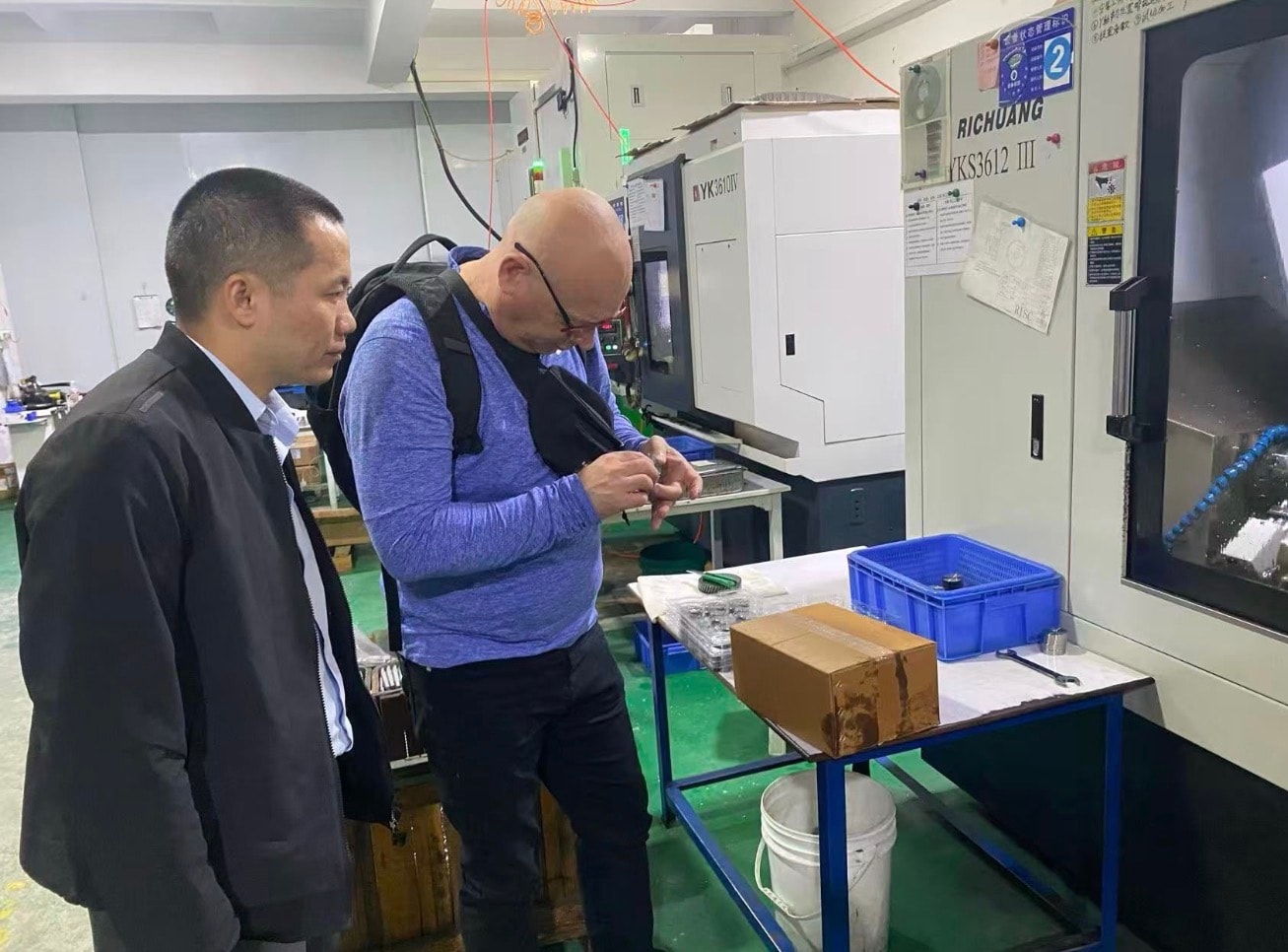
Inspect samples thoroughly against the drawing. Check all critical dimensions with appropriate measuring equipment. For precision components, this means calibrated instruments, not a steel rule.
Retain approved samples. Ensure the factory retains identical reference samples. The approved sample is the standard against which production will be measured.
First-Off Components
For production runs, a first-off inspection — checking the first items produced against the approved sample and drawing — is a valuable early warning system. Problems caught at this stage can be corrected before the full production run is affected.
Approval Before Production
Establish a clear approval process before production begins:
- Samples are submitted by the factory
- Samples are reviewed and approved (or rejected with comments) by the buyer
- Written approval is given before production commences
- Any changes to the approved sample require a new approval cycle
This process protects both parties. The factory knows exactly what is required before committing to production. The buyer has a clear record of what was approved.
Production Inspection
During production, some level of monitoring is advisable for anything beyond a simple repeat order. This might involve:
- In-process dimensional checks at critical stages
- Inspection before finishing processes (particularly important for fabricated products — see our metal fabrication guide)
- Pre-shipment inspection of finished goods
For UK businesses without in-country presence, working with a China sourcing and manufacturing service that has people on the ground means production can be monitored and inspected by someone who can physically visit the factory. Sauce Asia provides this as part of a complete UK-managed China sourcing service — from drawing review and factory selection through to sampling, production monitoring, quality inspection and UK delivery.
Before committing to a new supplier, it is also worth reading our guide on how to verify a Chinese supplier before paying a deposit — the due diligence steps that matter most before money changes hands.
Packaging
Specify packaging requirements clearly. Products that survive the manufacturing process can be damaged in transit due to inadequate packaging. For precision components, this means appropriate protection against impact, vibration, and moisture. For fabricated products, it means protection against scratching and impact damage.
Related Articles
- CNC Machining in China for UK Companies
- Metal Fabrication in China: A Guide for UK Buyers
- Quality Control in China: A Practical Guide for UK Importers
Manufacturing From Drawings in China?
Sauce Asia regularly works with UK companies manufacturing components and assemblies from engineering drawings in China. We manage the process from factory selection and sampling through to production monitoring, quality inspection and shipping.
Contact Sauce Asia to discuss your project.
Colin Moore has worked with Chinese manufacturers since 1999 and leads Sauce Asia's client relationships and sourcing strategy. Sauce Asia supports UK businesses with supplier sourcing, manufacturing, factory audits, production management, quality inspection and shipping from China.