Metal Fabrication in China: A Guide for UK Buyers
China has extensive metal fabrication capability covering sheet metal, laser cutting, welding, powder coating and complex assemblies. This guide covers what UK buyers need to know about sourcing fabricated metal products from China.

China has extensive metal fabrication capability. Factories range from small workshops producing simple pressed parts to large facilities with laser cutting, CNC press brakes, robotic welding, and powder coating lines capable of producing complex fabricated assemblies.
For UK businesses sourcing fabricated metal products — from simple brackets and enclosures to large structural assemblies and retail display systems — China can offer significant cost advantages. Managing the process effectively requires understanding the manufacturing processes involved and the quality risks at each stage.
Sheet Metal Fabrication
Sheet metal fabrication covers a wide range of processes:
Laser cutting — cutting flat sheet to profile. Modern fibre laser cutters can cut mild steel, stainless steel, and aluminium to high accuracy. Confirm the factory has appropriate laser cutting capability for your material thickness and profile complexity.
Folding and bending — forming sheet metal using press brakes. CNC press brakes can produce consistent bend angles and dimensions across a production run. Check that the factory has appropriate tooling for your bend radii and material thickness.
Punching — creating holes and cutouts using punch presses. For high-volume production, punching can be more economical than laser cutting for simple profiles.
Welding — joining fabricated components. See the welding section below.
Grinding and deburring — removing sharp edges and weld spatter. This is often underestimated as a quality step; inadequate deburring can cause handling injuries and affect the appearance of finished products.
Welding
Welding quality is one of the most important quality considerations in fabricated metal products. Poor welds can affect structural integrity, appearance, and the quality of subsequent finishing processes.
Key points for welding:
- Specify welding requirements clearly — weld type, size, length, position, and any relevant standards
- Confirm the factory has appropriate welding equipment — MIG, TIG, or spot welding as required
- Check welder qualification — for structural or safety-critical welds, welder qualification may be relevant
- Inspect welds before finishing — weld defects are much easier to identify and correct before powder coating or painting than after
Weld spatter, porosity, undercut, and incomplete fusion are common weld defects. A factory with good welding processes will have defined welding parameters, trained welders, and in-process inspection of welds.
Inspection Before Finishing
This is one of the most important practical points in this guide: inspect fabricated components before they go through powder coating, painting, or plating.
Surface finishing processes cover up defects. A dent, a weld defect, or a dimensional error that is clearly visible on bare metal becomes invisible under a coat of paint — until the product is in use and the problem becomes apparent.
Conducting dimensional inspection and visual inspection before finishing allows problems to be corrected at a stage when correction is straightforward. After finishing, correction may require stripping the coating, reworking the component, and refinishing — which is costly and time-consuming.
Powder Coating
Powder coating is the most common surface finishing process for fabricated steel products in China. Key quality considerations include:
- Surface preparation — the quality of powder coating depends heavily on surface preparation. Inadequate cleaning, degreasing, or pre-treatment will result in poor adhesion and premature coating failure
- Colour matching — confirm colour against an approved standard before production. RAL or BS colour references are widely understood
- Film thickness — specify the required film thickness and verify it during inspection
- Adhesion — adhesion testing (cross-cut test) can verify coating adhesion
- Appearance — check for runs, sags, orange peel, contamination, and colour variation
Plating
For products requiring zinc plating, chrome plating, or other electroplating processes, confirm that the factory has in-house plating capability or a reliable subcontractor. Plating quality is affected by bath chemistry, current density, and process control — factors that are difficult to assess without visiting the facility.
Drawings and Specifications
As with CNC machining, clear engineering drawings are essential for fabricated metal products. Drawings should specify:
- All dimensions with appropriate tolerances
- Material specification and grade
- Weld requirements — type, size, position
- Surface finish requirements — coating type, colour, film thickness
- Assembly information for multi-component products
- Packaging requirements
For complex assemblies, a 3D model in a standard format (STEP, IGES) can be valuable in addition to 2D drawings.
Large Fabricated Assemblies and Shipping
For large fabricated assemblies, consider shipping and container utilisation at the design stage. Products that can be partially disassembled for shipping and reassembled on arrival can significantly reduce shipping costs.
Check that packaging is adequate to protect fabricated products during a sea freight journey. Powder-coated surfaces are vulnerable to scratching and impact damage; adequate packaging is essential.
Sauce Asia's Experience With Metal Fabrication
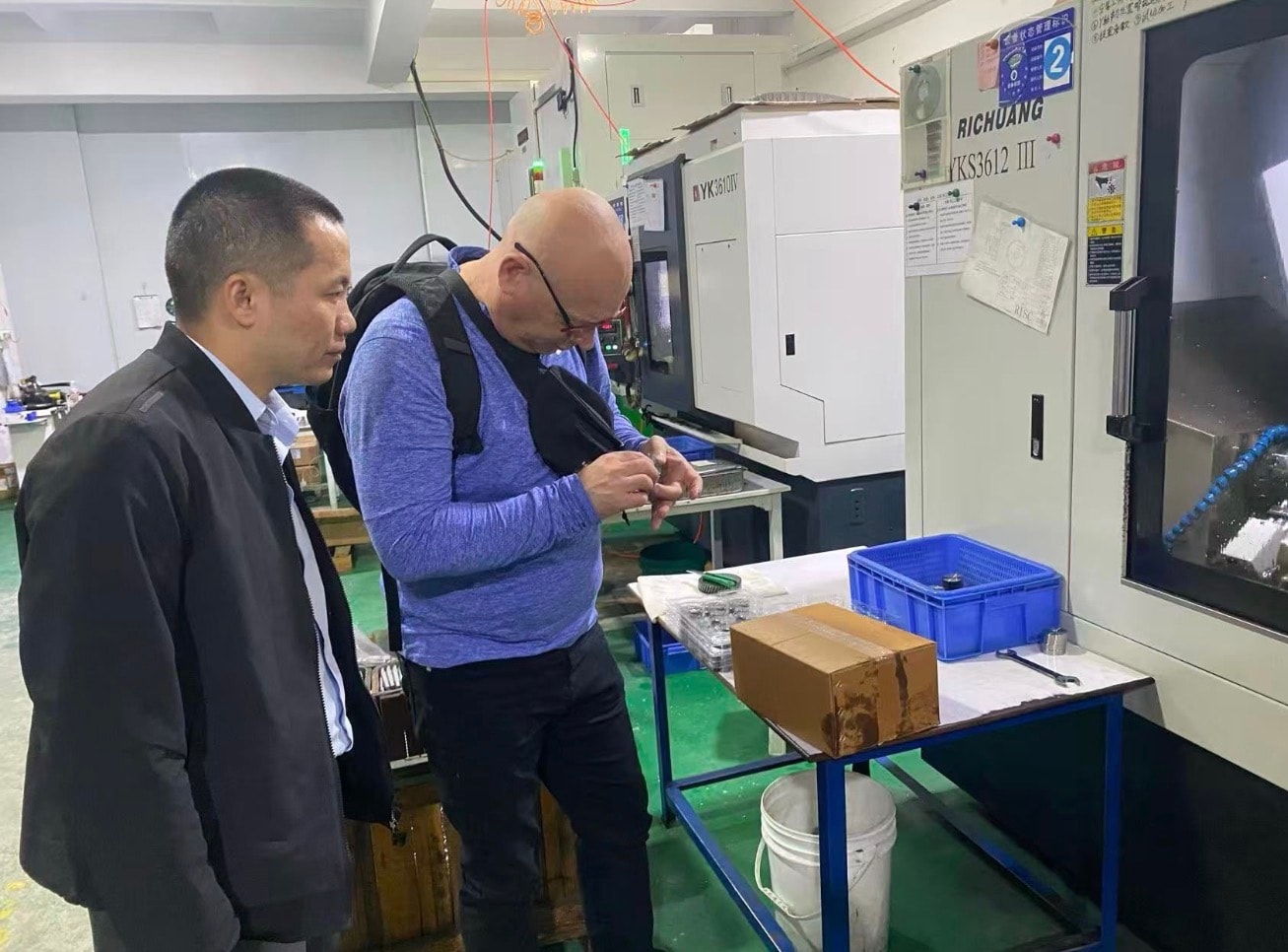
Sauce Asia has experience managing fabricated metal products in China across a range of applications, including retail display systems, structural components, and bespoke fabricated assemblies. Our China-based team can visit factories during production, conduct inspections before finishing, and manage the process through to shipment.
For UK businesses considering sourcing and manufacturing in China, having people on the ground who can visit factories and inspect work in progress is particularly valuable for fabricated products, where problems are most easily corrected before finishing. Sauce Asia provides this as part of a complete UK-managed sourcing team in China — covering factory selection, production oversight, quality inspection and shipping.
Related Articles
- Manufacturing in China From Engineering Drawings
- Quality Control in China: A Practical Guide for UK Importers
- CNC Machining in China for UK Companies
Sourcing Fabricated Metal Products From China?
Sauce Asia manages fabricated metal products in China for UK businesses, from simple sheet metal components to complex welded assemblies. We handle factory selection, production monitoring, quality inspection and shipping.
See our metal fabrication and sheet metal capabilities and our China sourcing agent service for more detail on how we manage the process.
For a real-world example, read our China metal fabrication case study — from engineering drawings through laser cutting, welding, quality inspection and UK delivery.
Contact Sauce Asia to discuss your project.
Colin Moore has worked with Chinese manufacturers since 1999 and leads Sauce Asia's client relationships and sourcing strategy. Sauce Asia supports UK businesses with supplier sourcing, manufacturing, factory audits, production management, quality inspection and shipping from China.