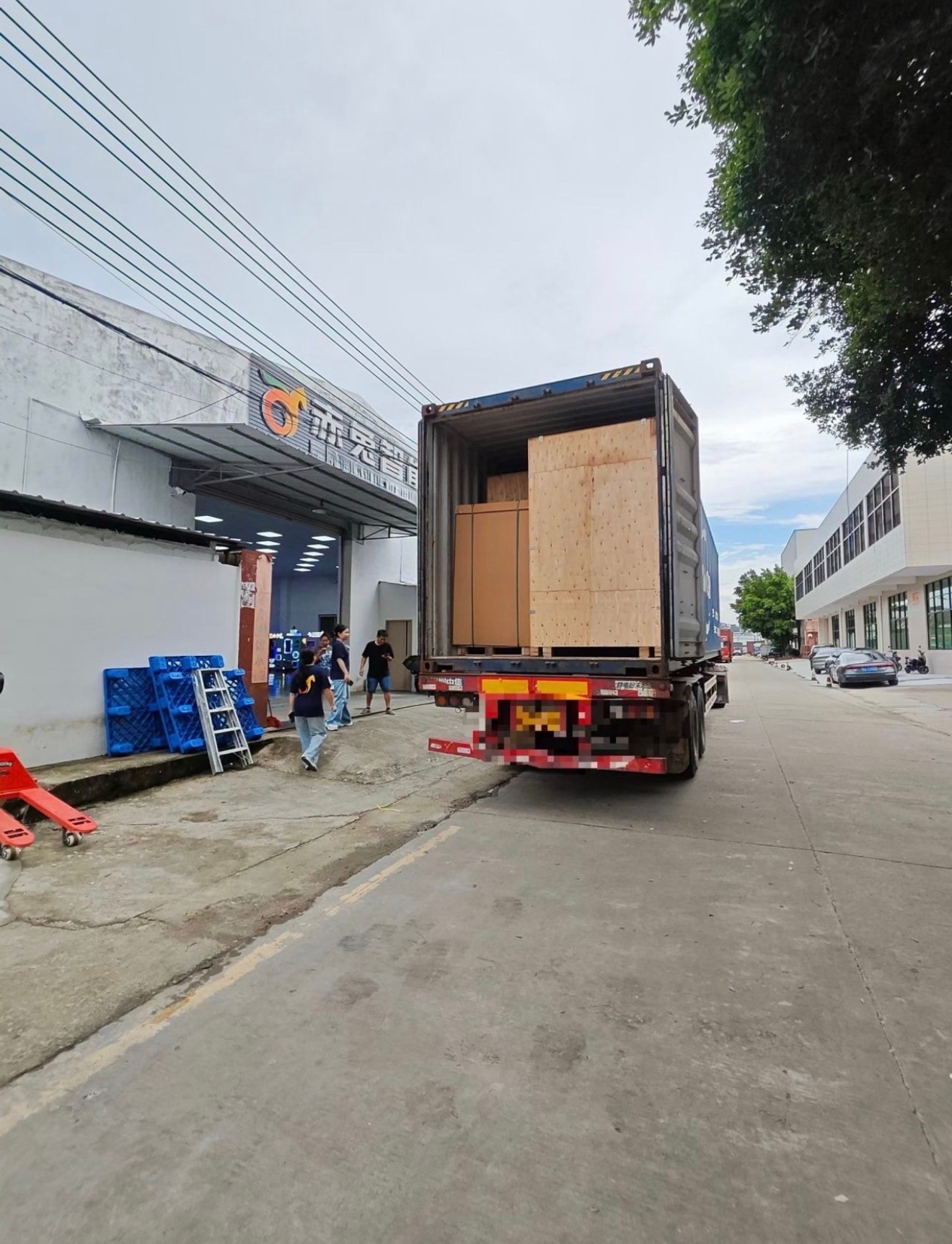
China Golden Week 2026: Factory and Shipping Deadlines for UK Importers
China's Golden Week runs from 1–7 October 2026 as carriers increase blank sailings. Learn how to protect production, inspections and UK deliveries.

China's National Day Golden Week runs from 1 to 7 October 2026. UK businesses with goods in production should confirm factory completion, inspection, documentation and vessel-booking dates now—not wait until the final week of September.
This year's holiday coincides with a sharp increase in shipping-line capacity adjustments. Drewry reported on 11 September that 79 blank sailings are expected across the principal East–West container trades between 14 September and 18 October. Asia–North Europe and Mediterranean routes represent 33% of those announced cancellations.
This does not mean that 79 direct China-to-UK vessels have been cancelled. The figure covers several major international trades. It does, however, show why UK importers should not assume that every planned sailing, production date or warehouse-delivery date will remain unchanged.
The practical priority is to connect all the stages: factory completion, quality inspection, collection in China, confirmed shipping space, export documents, UK customs clearance and final delivery.
When Is China Golden Week in 2026?
China's official 2026 holiday calendar sets the National Day holiday for Thursday 1 October to Wednesday 7 October.
Sunday 20 September and Saturday 10 October are adjusted working days. However, individual factories, offices, hauliers and logistics providers may operate different schedules around the official holiday.
Golden Week also follows the Mid-Autumn Festival holiday from 25 to 27 September. This creates a particularly compressed period for completing production, inspections and dispatches during the second half of September.
UK buyers should ask each supplier for its actual final working day, reopening date and availability of production, management and documentation staff.
Do Chinese Factories Close During Golden Week?
Many factories close or operate with significantly reduced staffing during the holiday, but arrangements vary.
Some production facilities stop completely. Others retain small teams for maintenance or urgent work. Office staff, quality managers, engineers, subcontractors and packing teams may follow different schedules.
The operational slowdown can begin before 1 October because employees may travel to their home provinces. Normal output may not resume immediately on 8 October, particularly where a factory depends on migrant labour or outside subcontractors.
Ask the factory to confirm in writing:
- Its last full production day
- When production staff will return
- Whether management and export-documentation staff will be available
- Whether subcontracted processes will remain operational
- The final date for inspection
- The final collection date before the holiday
- Whether packing materials and components are already available
- Whether any production will remain unfinished until after the holiday
A general statement such as "we will finish before Golden Week" is not a sufficiently detailed production plan.
Why Quality-Control Planning Is Critical
A factory's stated completion date is not the same as a safe dispatch date.
The finished goods may still need:
- Dimensional or functional checks
- Quantity verification
- Visual inspection
- Packaging and labelling checks
- Testing against an approved sample
- Corrective work
- Reinspection
- Carton, crate or pallet measurements
- Final shipping documents
If an inspection identifies defects on the last working day, the factory may not have enough time or staff to complete corrective work before the holiday.
UK buyers should therefore leave a realistic gap between the inspection and the cargo collection date. Where possible, the inspection should be booked only after the factory provides evidence that the order is fully produced and packed.
Read the Sauce Asia pre-shipment inspection guide and what to do when a Chinese supplier fails inspection.
Could Golden Week Delay China-to-UK Shipping?
Yes. Delays can arise both before and after the holiday.
In the run-up to Golden Week, importers frequently try to move cargo before factories close. This can place pressure on:
- Factory collection vehicles
- Container and equipment availability
- Warehouses and consolidation points
- Export-documentation teams
- Port cut-off times
- Vessel space
- Air-cargo capacity
After the holiday begins, shipping lines may reduce capacity to reflect lower export volumes. This is where blank sailings become important.
A blank sailing occurs when a carrier cancels a scheduled voyage or removes a port call. Cargo may be transferred to a later vessel or an alternative service.
According to Drewry's 11 September update, 79 blank sailings are expected across the major East–West trades from 14 September to 18 October, equivalent to 11% of 721 planned sailings. Announced cancellations for weeks 38–41 increased from 39 to 70 in one week.
The cancellations are distributed across several trades:
- 52% Transpacific eastbound
- 33% Asia–North Europe and Mediterranean
- 15% Transatlantic
These figures must not be interpreted as 79 cancelled China-to-UK vessels. Importers need to check the specific carrier, service, port pair and booking affecting their cargo.
What Is Happening to China–Europe Freight Rates?
Freight rates and available space are not moving in exactly the same direction.
On 10 September, Drewry's World Container Index remained stable at US$4,476 per 40-foot container. However, the Shanghai-to-Rotterdam benchmark fell 2% to US$3,997 per 40-foot container.
These are market benchmarks, not quotations for shipping a particular container from a Chinese factory to a UK warehouse.
An individual quotation depends on factors including:
- Chinese collection address
- Export port
- UK destination
- FCL or LCL shipment
- Container and equipment type
- Cargo weight and volume
- Commodity and dangerous-goods status
- Carrier and service
- Departure date
- Origin and destination charges
- Customs clearance
- Final UK haulage
Falling spot benchmarks do not guarantee that space will be available on a buyer's preferred vessel. Carriers can withdraw capacity while headline rates remain stable or decline.
This is why UK businesses should confirm both the current price and the actual booking status.
Are Carriers Returning to the Suez Canal?
Some services are returning, but this remains selective.
Maersk reported on 9 September that the AE19 and AE15 services operated with Hapag-Lloyd would now transit through the Suez Canal instead of sailing around the Cape of Good Hope.
Maersk described these as targeted changes and specifically said they do not represent a wider return of the East–West network.
For importers, this means transit times should be checked against the named service rather than assumed from general news about Suez.
A quotation should identify, where available:
- Carrier
- Service
- Vessel
- Planned routing
- Transhipment points
- Estimated departure
- Estimated port arrival
- Whether the space is confirmed
Routing can still change when security or operational conditions require it.
What Is the Last Safe Shipping Date Before Golden Week?
There is no single date that applies to every shipment.
The practical deadline depends on:
- When production will genuinely finish
- Whether inspection is required
- Time needed for corrective work
- Distance between the factory and port
- Export-warehouse or consolidation requirements
- Carrier cut-off time
- Documentation deadlines
- Whether the booking and equipment are confirmed
A factory finishing production on 29 or 30 September is unlikely to leave much room for inspection, correction and collection before the holiday.
UK buyers should work backwards from the vessel's cargo cut-off—not merely from its published departure date.
A suitable planning sequence is:
- Confirm production completion.
- Obtain packing details and evidence of readiness.
- Conduct the quality inspection.
- Allow time for corrective action if required.
- Confirm package dimensions, weights and quantities.
- Complete export and shipping documents.
- Collect the goods before the carrier's cut-off.
- Confirm that the cargo has been accepted for the intended sailing.
The Risk for Multi-Supplier Shipments
Golden Week creates additional complications when goods from several factories are being consolidated.
Every supplier must complete production, inspection and delivery to the consolidation warehouse before the relevant cut-off. One late supplier can force the importer to choose between:
- Delaying the entire consolidated shipment
- Shipping without the missing goods
- Paying additional storage
- Making a separate LCL or air shipment
- Moving the cargo to a later vessel
Suppliers may also give different reopening dates. The importer needs one coordinated schedule covering all factories rather than several unrelated promises.
Customs Clearance and Documentation
Golden Week does not remove the UK importer's customs responsibilities.
Before the cargo arrives, the clearance process may require:
- Accurate product descriptions
- Correct commodity codes
- Commercial invoice
- Packing list
- Country-of-origin information
- Freight and insurance values
- Bill of lading or air waybill
- Import licences or supporting certificates where applicable
- Importer's EORI number
- Details of any applicable trade-remedy measures
The immediate holiday risk is that factory or exporter staff may be unavailable to correct missing or contradictory documents.
Check documents before dispatch, while the appropriate people in China are still available.
UK businesses should also distinguish between arrival at the UK port and final delivery. Port release, customs clearance, haulier availability and the customer's warehouse booking still have to be coordinated.
Read the Sauce Asia guide to the complete cost of importing from China to the UK.
Seven Actions UK Importers Should Take Now
1. Get the factory's exact holiday dates
Ask for the final working day and the date on which production, quality and documentation teams will be fully operational again.
2. Verify real production progress
Request current photographs, videos, production records or an on-site check. Do not rely solely on a repeated estimated completion date.
3. Book inspections before the final possible day
Allow time for the inspection report, corrective work and reinspection.
4. Confirm the carrier cut-off
The cargo cut-off, documentation cut-off and vessel departure date are different deadlines.
5. Ask whether the booking is confirmed
A freight price is not a confirmed vessel booking. Obtain the booking status and check for announced sailing changes.
6. Check the complete quotation
Confirm whether it includes factory collection, Chinese origin charges, international freight, UK destination charges, customs clearance and delivery to the final warehouse.
7. Protect critical delivery dates
If a small quantity is genuinely urgent, consider whether splitting the shipment between air and sea is commercially justified. Compare the additional freight expense with the potential cost of missing the required UK date.
How Sauce Asia Can Help
Sauce Asia helps UK businesses coordinate the complete process between Chinese manufacturing and final UK delivery.
Depending on the project, this can include:
- Communicating directly with Chinese factories
- Checking production progress
- Coordinating several suppliers
- Arranging factory audits and quality inspections
- Confirming packaging, quantities, dimensions and weights
- Coordinating collection from the factory
- Comparing appropriate sea or air-freight options
- Supporting customs-clearance arrangements
- Arranging delivery into the customer's UK warehouse
The important advantage is that production, quality control and shipping are not managed as disconnected tasks.
Learn more about Sauce Asia's China manufacturing service, quality control in China and China-to-UK freight, customs clearance and warehouse delivery.
Discuss Your Pre-Golden-Week Shipment
If you have goods in production or a shipment planned for late September or October, check the complete production and logistics schedule now.
Sauce Asia can help coordinate the Chinese factory, inspection, collection, freight, customs clearance and delivery into your UK warehouse.
Contact Sauce Asia about your China manufacturing or shipping requirement.
Sources
- Chinese Government: official public holidays for 2026
- China Briefing: detailed 2026 holiday dates and adjusted working days
- Drewry: Cancelled Sailings Tracker, 11 September 2026
- Drewry: World Container Index, 10 September 2026
- Maersk: Europe Market Update, 9 September 2026
- UK Government: importing goods into the UK